
In short
- Loneliness is the gap between the connection you have and the connection you need. You can feel it in a full house.
- The World Health Organization estimates that about 1 in 6 people worldwide is affected by loneliness.
- Small, regular contact helps more than big plans: one message, one walk, one honest conversation.
Lonely, but never alone
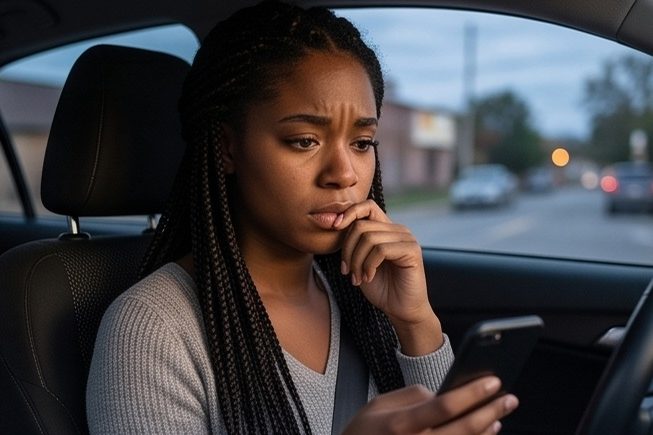
You may spend all day with people: colleagues, children, a partner, other parents at the school gate. And still feel lonely. Loneliness is not about how many people are around you. It is about whether anyone really knows how you are.
For many women it grows quietly: friendships that drift after children, a move to a new city, a partner who is busy, or simply no time for anything that isn't a task.
It is more common than it looks
In 2025, the World Health Organization's Commission on Social Connection reported that about 1 in 6 people worldwide is affected by loneliness, and linked social connection with better health and a lower risk of early death. Loneliness is not a personal failure. It is a common human experience, and it can change.
Signs you might be lonely
- You feel unseen, even when people are around.
- You have nobody to tell small things to.
- You scroll a lot in the evenings, looking for something.
- You feel tired or low without a clear reason.
Small steps back to connection
- Send one message today. "I was thinking of you" is enough.
- Turn routines into company: a walk with a neighbour, a coffee after drop-off, a call on the way home.
- Say how you really are to one person, instead of "fine".
- Join something small and regular: a class, a choir, a walking group, a volunteer shift. Regular beats big.
- Give before you ask. Helping someone is a quick way to feel connected again.
- Be patient. New friendships take time and repetition.
When to get support
The NHS suggests talking to someone you trust, and getting help if loneliness affects your mood or daily life. If you feel low for more than two weeks, or loneliness comes with thoughts of hopelessness, talk to your doctor or a mental health professional. If you are ever in danger, call your local emergency number.
 How Senda helps
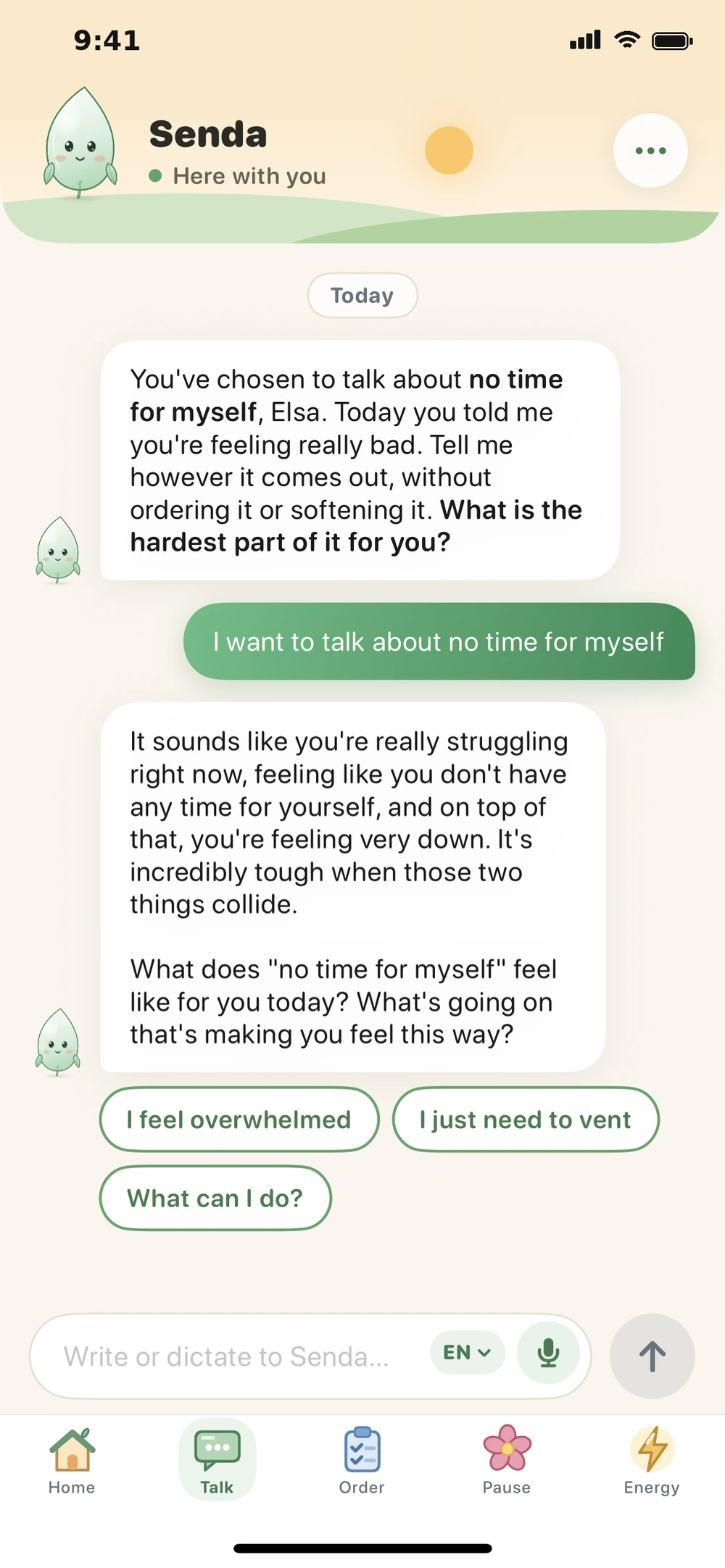
In Talk, you can say how you really are, any time, without judgment. Senda listens first and replies with your day in mind: your energy, your cycle and what is on your plate.
- Empty your head in Order: dictate everything and get a plan with dates and reminders.
- See your energy for today, so you can plan around it.
- Take a real break, from 5 minutes to 4 hours.
Free plan, no card needed. 3-day free trial.
Frequently asked questions
Why do I feel lonely even when I have people around me?
Loneliness is about the quality of connection, not the number of people. You can feel lonely if nobody really knows how you are, even in a busy home or workplace.
How common is loneliness?
In 2025 the World Health Organization estimated that about 1 in 6 people worldwide is affected by loneliness.
What can I do when I feel lonely?
Start small: send one message, turn a routine into company, say how you really are to one person and join something regular. If it affects your mood for weeks, talk to a professional.
Sources
Keep reading


Senda is a self-care and organization companion, not a medical service. This guide is informational and does not replace advice from a qualified professional.