
Guides · Feeling good
Feeling good
The small return to yourself.


Some days you feel off and can't say why. Thoughts loop at night, small things hurt more than usual, or you feel alone in a full house. Naming the feeling and putting it into words is often the first step to feeling lighter.
Learn how to vent in a healthy way, how to stop overthinking, what to do when you feel off for no reason and small steps for feeling lonely even when you are never alone.
You do not need a reason to deserve support. Saying how you feel, to a friend, on paper or to Senda, turns a cloud of worries into something you can look at. From there it is easier to decide what needs action, what needs time and what simply needed to be said. Be patient with yourself while you find what works for you.
These guides offer gentle, practical steps. If you feel low for more than two weeks, or you are ever in danger, please contact a professional or your local emergency number.
Start here
- How to vent in a healthy way, and why putting it into words helps: How to vent so you feel lighter afterwards, not more stuck in the same thoughts.
- How to stop overthinking: 8 practical ways to quiet your mind: Practical ways to stop thoughts going round in circles, especially at night.
- Emotional exhaustion: the signs, why it happens and how to start recovering: Signs that you are emotionally drained, and small steps to start recovering.
Guides in this subject
How to vent in a healthy way, and why putting it into words helps
Venting can help you feel lighter or leave you more stuck. How to vent in a healthy way, by talking or writing, and what to do when there's nobody to tell.
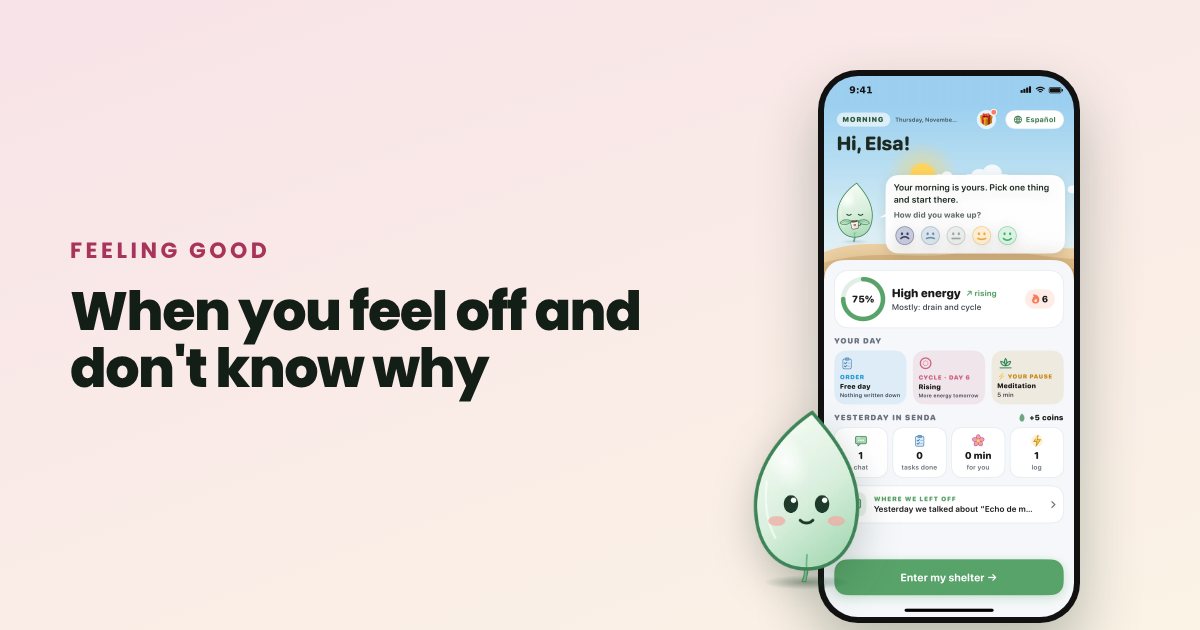
When you feel off and don't know why: 6 gentle steps
Some days you just feel off and can't say why. Six gentle steps to check in with yourself: sleep, body, cycle, load and feelings, and when to ask for help.
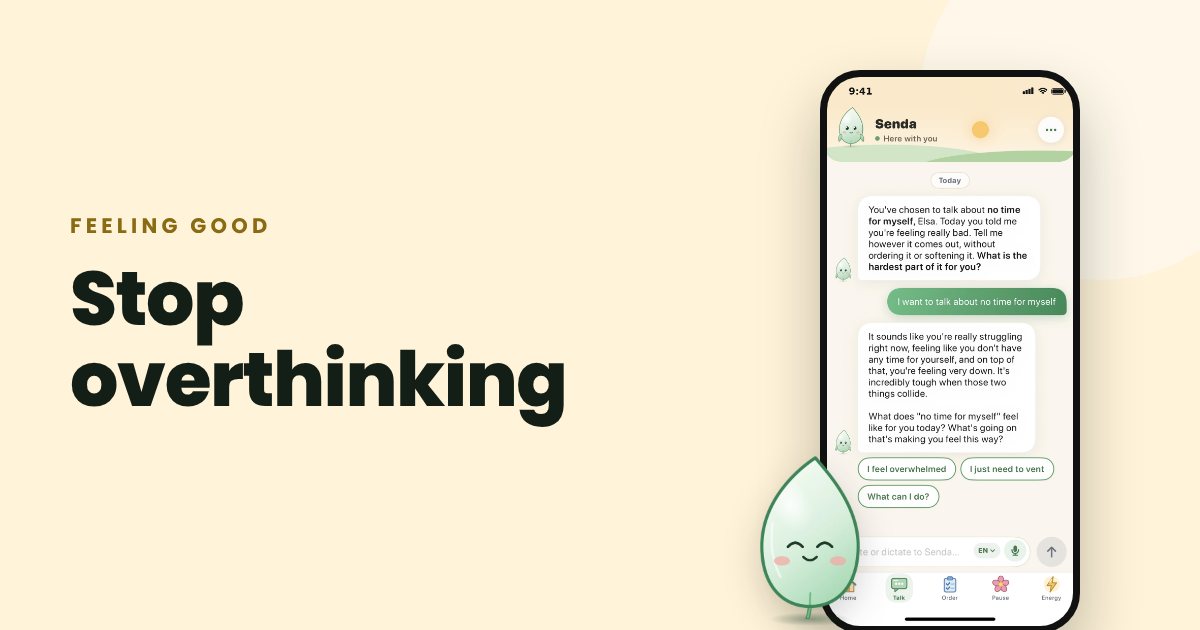
How to stop overthinking: 8 practical ways to quiet your mind
Why your mind keeps looping, how overthinking differs from problem solving and 8 practical ways to quiet it, from writing it down to worry time.

Feeling lonely even when you are never alone: why it happens and small steps back
Why women can feel lonely surrounded by family and work, what the WHO says about loneliness, and small, realistic steps to feel more connected.
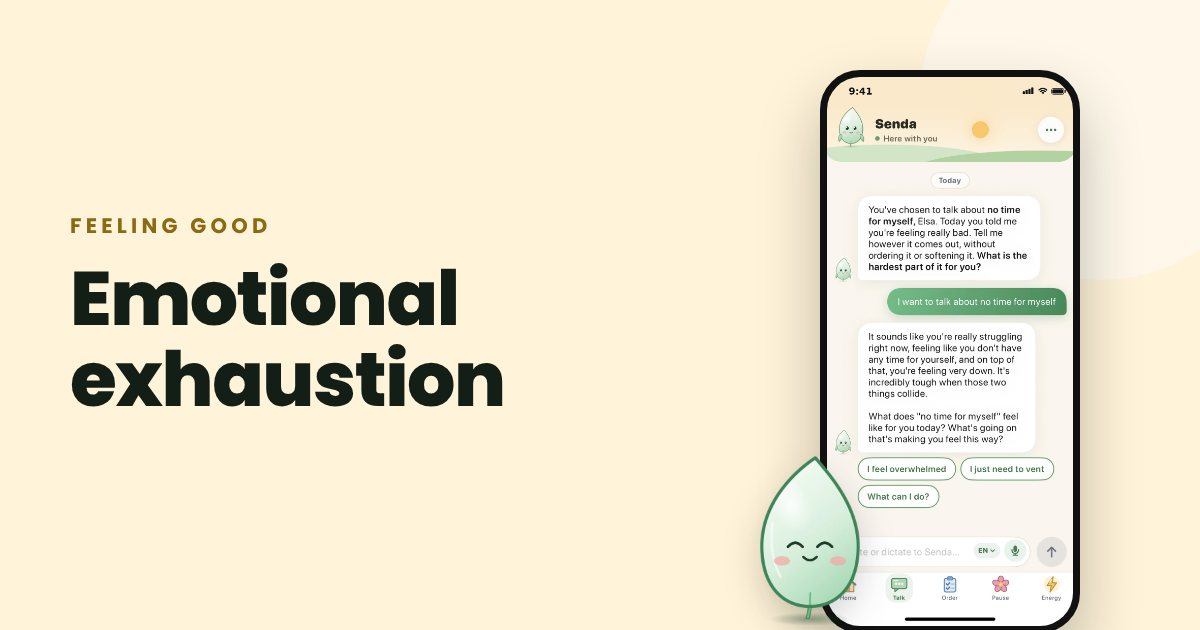
Emotional exhaustion: the signs, why it happens and how to start recovering
What emotional exhaustion feels like, how it relates to burnout, why women who care for everyone are at risk, and small steps to recover and when to get help.
Free plan, no card. Your chats stay on your iPhone.
