

In short
- Venting helps most when it moves you forward: naming what you feel, then asking what you need.
- Putting feelings into words, speaking or writing, can make them easier to understand.
- If there's no one to tell, a private place to say it still helps. In a crisis, call your local helpline.
Why holding it in is so tiring
Many women carry worries quietly to avoid burdening others. Keeping it all inside takes energy: the same thoughts go round and round, and small things start to feel huge.
Venting vs. ruminating
Venting can go two ways. Helpful venting puts the feeling into words and eventually leads to "what do I need now?". Ruminating repeats the same complaint again and again and can leave you feeling worse. The difference is not how much you talk, but whether the conversation moves.
How to vent in a healthy way
- Say what happened, briefly.
- Name the feeling: angry, tired, hurt, overwhelmed, scared. Naming is half the relief.
- Notice what is underneath: "I feel unseen", "I'm afraid of letting people down".
- Ask what you need: rest, help, a conversation, a boundary, simply to be heard.
- Choose one small next step, or decide that today, being heard is enough.
Talking or writing?
Both work. Psychologist James Pennebaker's research on expressive writing found that writing about difficult experiences for a few minutes over several days was linked to benefits for many people. Talking out loud, to a friend or even to yourself, can do something similar: it slows thoughts down and gives them shape.
Who to vent to
- Someone who listens without jumping to fix it. Tell them: "I just need to say it, not solutions."
- A private place when there's no one around or you don't want to burden anyone.
- A professional if the same weight keeps coming back or affects your daily life.
Healthy venting vs. venting that keeps you stuck
| Healthy venting | Venting that keeps you stuck |
|---|---|
| Has a beginning and an end | Goes on for hours or days |
| Names what you feel ("I'm hurt and tired") | Repeats the story again and again |
| Leaves you a little lighter | Leaves you angrier or more anxious |
| Moves towards "what do I need now?" | Stays on "why does this always happen to me?" |
| Chooses a safe listener | Pulls in everyone, or the person involved in the heat of the moment |
If you notice you are in the right-hand column, it is not a failure. It is a sign to pause, write it down or move your body before you continue.
A 10-minute venting routine
- Set a timer for 10 minutes.
- Say or write everything, without editing: what happened, what you feel, what you wish had happened.
- Name the feeling in one or two words: angry, sad, scared, overwhelmed.
- Ask yourself one question: what do I need now? Rest, help, a conversation, a boundary?
- Pick one small step and close the timer.
How to ask someone to listen
Many people jump to advice when you vent. You can help them help you:
- "I don't need solutions right now, I just need to get this out."
- "Can I vent for five minutes? Then I'd love your opinion."
- "I'm not angry with you, I'm just tired. Can you listen?"
Common mistakes
- Venting only when you are about to explode. Small, regular venting prevents the build-up.
- Venting to the person you are upset with in the heat of the moment. Calm down first, then talk.
- Replaying the story to everyone. Once or twice helps; ten times keeps it alive.
- Thinking venting replaces help. If the same problem keeps coming back, it may need a change, not just a vent.
You may also like: Mental load: what it is, the signs, and 7 ways to lighten it · Brain dump: how to empty your head in 5 minutes (and turn it into a plan) · Feeling lonely even when you are never alone: why it happens and small steps back
If you are in crisis
If you are thinking about harming yourself or feel you can't stay safe, call your local emergency number right away, or a crisis line: 988 in the US, Samaritans on 116 123 in the UK, 024 in Spain.
 How Senda helps
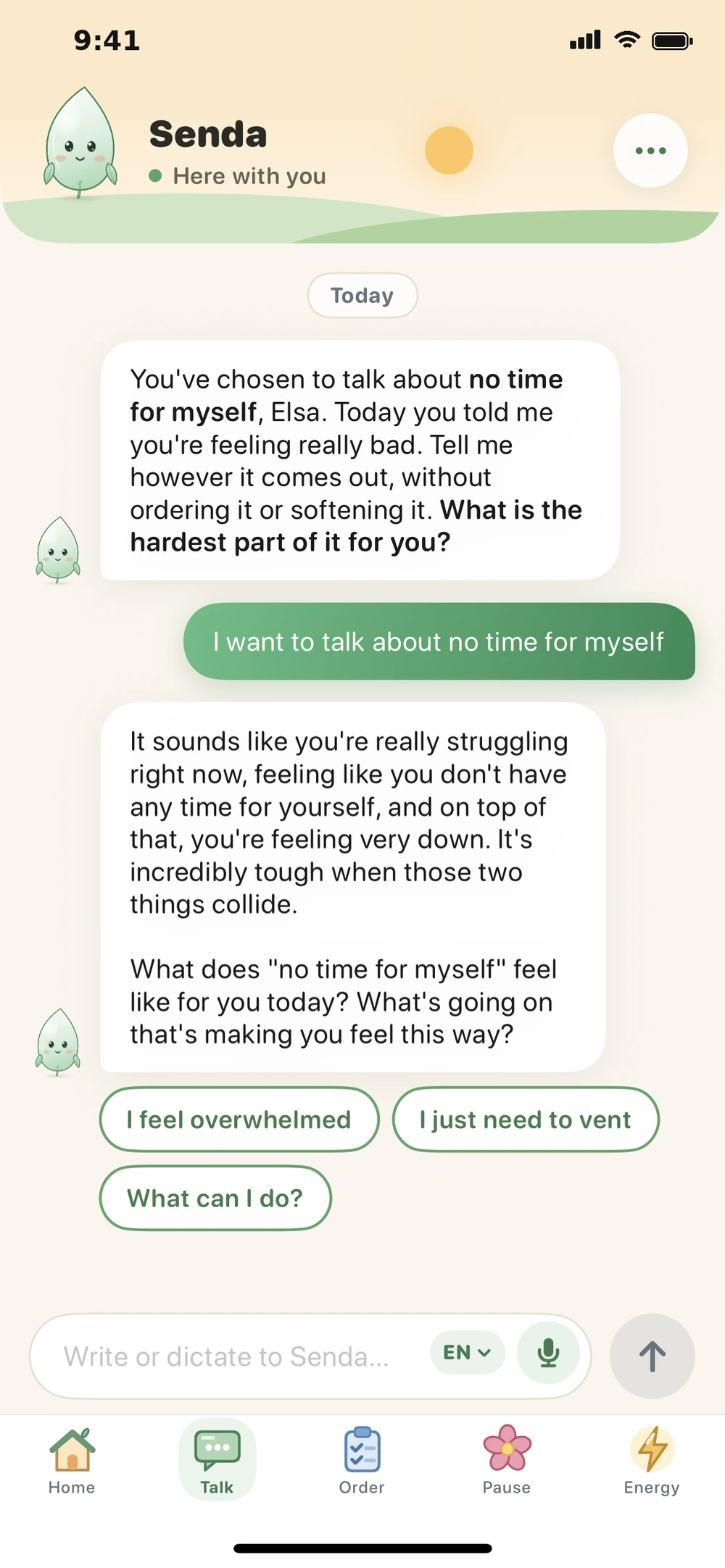
Senda's Talk tab is a private place to vent, any time.
- Senda listens first and asks before it advises: no lectures, no judgment.
- Start from a topic like mental load, relationships or no time for yourself, or just type or say what's on your mind.
- Your conversations are saved on your iPhone. Senda is a support companion, not therapy, and points you to help if you need more.
Free plan, no card needed. 3-day free trial.
Frequently asked questions
How do I vent in a healthy way?
Say briefly what happened, name the feeling, notice what is underneath it, then ask yourself what you need and choose one small next step, or simply let being heard be enough for today.
Is venting good for you?
Venting helps when it puts feelings into words and moves you forward. Repeating the same complaint over and over, without moving, can leave you feeling worse.
Where can I vent if I have no one to talk to?
Writing in a private journal or using a private app like Senda can help. If you feel unsafe, call your local emergency number or a crisis line.
Is it healthy to vent?
Venting can help when it lets you name your feelings and move towards what you need. If it turns into repeating the same story and leaves you more upset, it may be time to pause, write it down or talk to someone in a different way.
How do I vent without burdening my friends?
Ask first, keep it time-limited, say what you need (to be heard or advice) and offer the same in return. Writing or speaking privately is another option when friends are busy.
Sources
Keep reading



Senda is a self-care and organization companion, not a medical service. This guide is informational and does not replace advice from a qualified professional.