
In short
- Self-care is anything that refills you, not a spa day you never have time for.
- The NHS "5 steps to mental wellbeing" are a simple guide: connect, be active, learn, give and pay attention to the present.
- Pick by the time and energy you have today: two minutes count.
What self-care really is
Self-care is often sold as bubble baths and face masks. Those are fine, but they are not the point. Self-care is anything you do on purpose to look after your body, your mind or your relationships, so you have something left for yourself and for the people you care about.
The NHS suggests five simple steps to mental wellbeing: connect with other people, be physically active, learn new skills, give to others and pay attention to the present moment. Most of the ideas below fit one of them. And research on short breaks backs up that small moments count: a 2022 meta-analysis found that micro-breaks were linked with more vigour and less fatigue.
2 minutes
- Breathe out slowly ten times, longer than you breathe in.
- Drink a full glass of water.
- Step outside or open a window and look at the sky.
- Stretch your neck and shoulders.
- Send a voice note to a friend you miss.
- Write down the one thing worrying you most.
- Put on a song you love and do nothing else.
- Wash your face with cool water.
- Say no to one thing you do not need to do today.
- Write one thing that went well today.
10 minutes
- A short walk around the block, without your phone in your hand.
- A cup of tea or coffee sitting down, not standing in the kitchen.
- A gentle stretching routine.
- Empty your head: write every task and worry on one list.
- Read a few pages of a book that is not for work.
- Tidy one small surface that bothers you.
- Call someone who makes you laugh.
- Lie on the floor with your legs up the wall.
- Plan one nice thing for the weekend.
- Sit in the sun.
30 minutes
- A longer walk or a bike ride.
- A class or video of yoga, Pilates or dance.
- Cook something simple you actually like.
- A shower or bath with no rush.
- Meet a friend for a coffee.
- Journal: what is weighing on you, and what would help.
- Learn something small: a recipe, a few words of a language, a craft.
- Go to bed thirty minutes earlier.
- Clear one task you have been avoiding, then rest.
- Sit in a park or a quiet place.
60 minutes or more
- A swim, a run or a sports class.
- Lunch or a walk with a friend.
- A nap on a free afternoon.
- A museum, a market or somewhere new near home.
- A hobby session: painting, music, gardening.
- A morning or afternoon completely off, planned with your partner or family.
- Volunteer for something you care about.
- A long phone call with someone far away.
- Sort out one admin task that keeps you up at night, then do something fun.
- A day without plans.
How to choose on a low-energy day
| How you feel | Try |
|---|---|
| Tired and wired | Breathing, a short walk, an early night |
| Sad or lonely | A voice note, a call, a coffee with a friend |
| Overwhelmed | Empty your head on paper, then one 10-minute break |
| Restless | Movement: a walk, a dance, a quick workout |
| Flat, nothing feels good | Sunlight, water, one tiny task, and gentleness with yourself |
Common mistakes
- Waiting for a free day. It rarely comes. Two minutes today beats a spa day next year.
- Turning self-care into another task to do perfectly. It should make you feel better, not guilty.
- Only doing it alone. Connection is one of the strongest forms of self-care.
- Using the phone as the break. Scrolling often leaves you more tired.
Read next: A 10-minute morning routine for women who have no time in the morning
When to get help
Self-care helps, but it is not a treatment for depression, anxiety or burnout. If you feel low or anxious most days for more than two weeks, or nothing feels enjoyable any more, talk to your doctor.
 How Senda helps
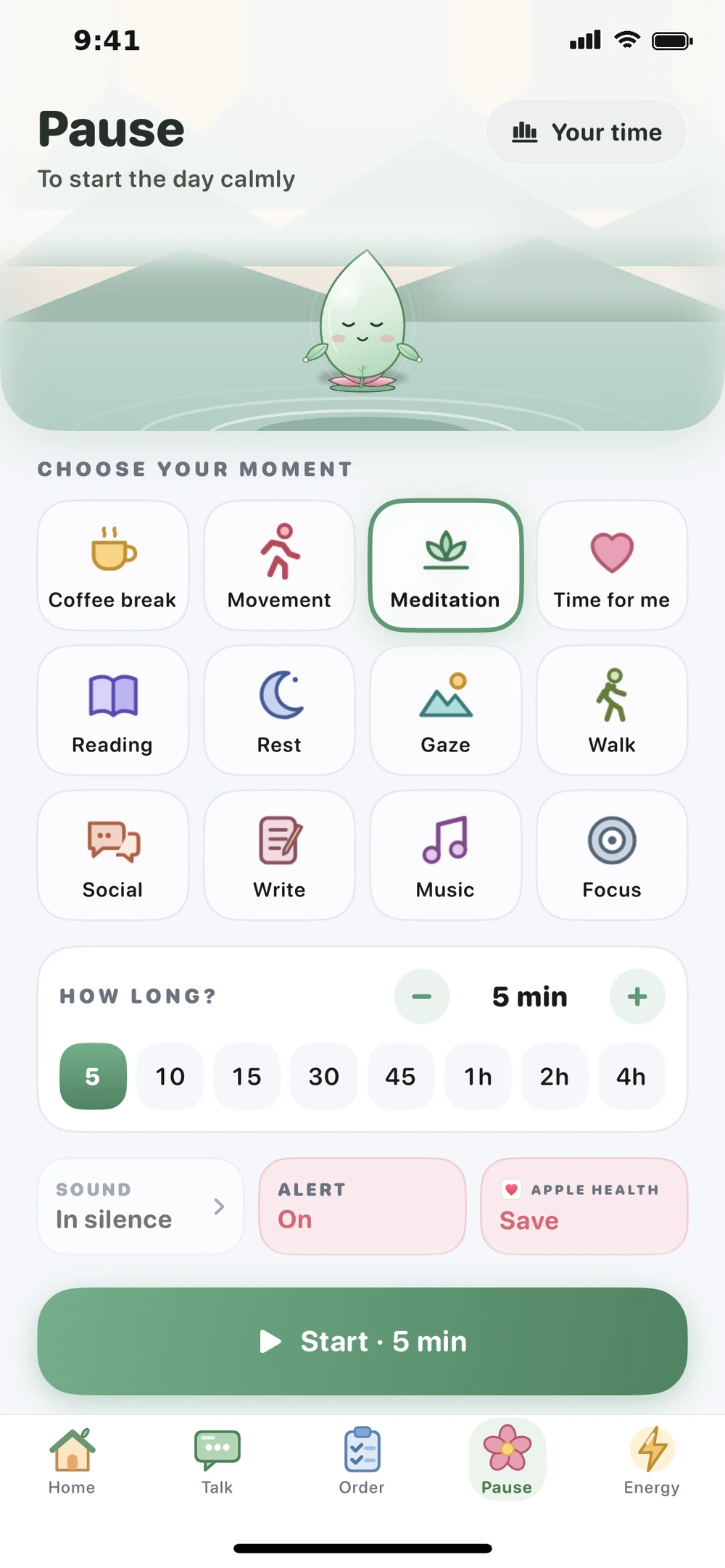
Senda's pauses are made for real days: a coffee, music, a walk, reading or rest, for the time you actually have, from 5 minutes to 4 hours. Senda keeps you company with gentle sound and lets you know when it ends.
- See your energy first, and pick the pause that fits.
- Empty your head in Order before you stop, so you can really switch off.
- Vent in Talk if the day still feels heavy.
Free plan, no card needed. 3-day free trial.
Frequently asked questions
What are some simple self-care ideas?
Drinking a glass of water, breathing out slowly, a ten-minute walk, a cup of tea sitting down, calling a friend, stretching, reading a few pages or going to bed earlier are simple self-care ideas.
How can a busy mom practise self-care?
Choose very short moments that fit into the day, such as two minutes of breathing, a walk with the pram, a coffee sitting down or an earlier night, and ask for help to protect one longer break a week.
What are the 5 steps to mental wellbeing?
The NHS suggests connecting with other people, being physically active, learning new skills, giving to others and paying attention to the present moment.
Is self-care selfish?
No. Looking after yourself gives you more energy and patience for the people around you. It is part of looking after your family, not the opposite.
Sources
Keep reading

Senda is a self-care and organization companion, not a medical service. This guide is informational and does not replace advice from a qualified professional.