
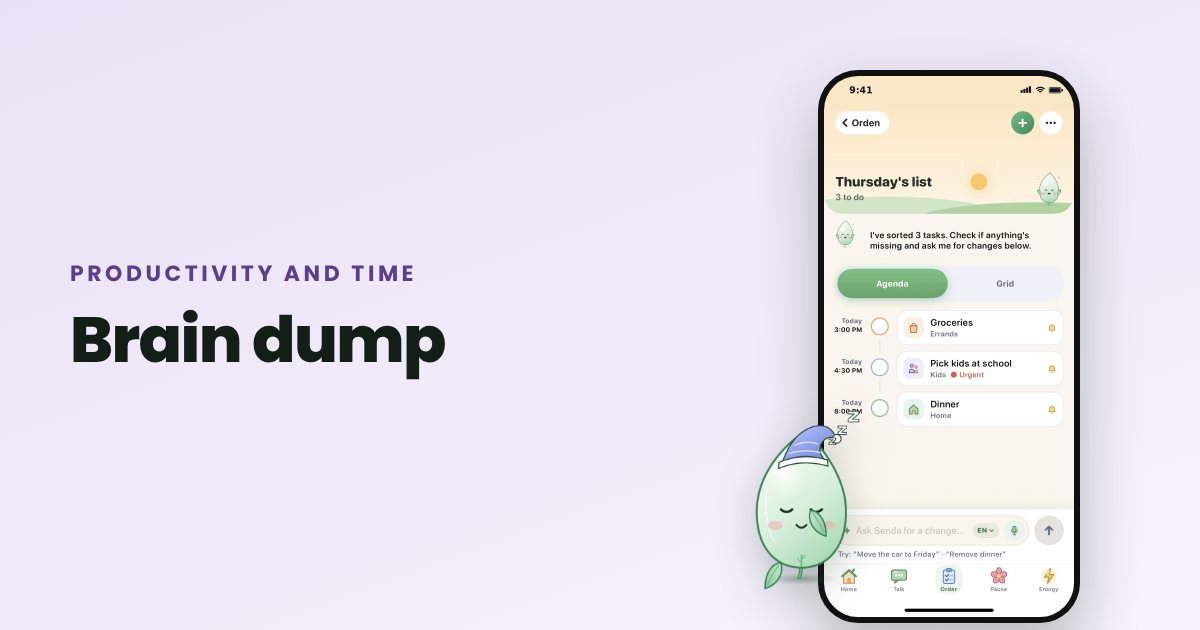
In short
- A brain dump means getting every task, worry and idea out of your head without sorting it first.
- Five minutes is enough. Speaking it out loud works as well as writing, and it is faster.
- The magic happens after: sort by when, pick three priorities and let the rest wait somewhere safe.
What is a brain dump?
A brain dump is exactly what it sounds like: you take everything circling in your head (tasks, worries, ideas, "don't forget") and put it outside, on paper, in a note or by voice. No order, no judgment.
It helps because your working memory is small. Holding twenty open loops at once is tiring; seeing them written down frees space to think.
Writing things down has research behind it: psychologist James Pennebaker found that putting difficult experiences into words over a few days was linked to benefits for many people.
How to do a brain dump in 5 minutes
- Set a timer for 5 minutes.
- Say or write everything, in any order: "dentist, Marta's birthday, reply to Ana, buy rice, worried about the meeting".
- Include worries, not just tasks. "I'm worried about mum" belongs on the list too.
- Don't stop to sort. If you remember something halfway, add it.
- Stop when the timer ends. You can always add more later.
Writing or speaking?
Both work. Writing slows you down and some people like that. Speaking is faster and easier when your hands are busy, on the way home or while cooking. Use whatever you will actually do.
What to do with your brain dump
- Group by when: today, this week, someday.
- Move anything with a time into your agenda.
- Pick three priorities for today.
- Turn worries into a next step ("call mum on Sunday") or simply let them be written down.
A brain dump example
Here is an example of a 5-minute brain dump, written the way it usually comes out, and what it became:
The dump: "dentist for Leo, the report for Friday, call mum, the boiler is making a noise, birthday party Saturday present?, I never exercise, book the flights, the kitchen tap, answer Sara's message, pay the school trip, I want to read again, the car insurance renews soon"
Sorted into four groups:
| Group | Items |
|---|---|
| Do this week (with a date) | Report (Fri), school trip payment (Wed), present for Saturday, call mum (Thu) |
| Book or schedule | Dentist for Leo, flights, boiler check |
| Hand over or share | Kitchen tap, car insurance renewal |
| For me, not urgent | Exercise, reading |
Twelve worries became four clear actions, three calls, two things for someone else and two wishes to plan with care. That is the point of a brain dump: not to do everything, but to see it.
Prompts if your mind goes blank
Go through these areas one by one and write whatever comes up:
- Work: deadlines, emails, meetings to prepare.
- Home: repairs, cleaning, things running out.
- Family: school, activities, birthdays, health appointments.
- Money: bills, payments, renewals.
- People: messages to answer, people to call or see.
- You: health, rest, things you miss.
Common mistakes
- Turning the dump into a to-do list straight away. First empty, then sort. Mixing both slows you down.
- Keeping everything. Some items can be deleted or postponed for good.
- Dumping in five different places. Use one notebook or one app, so you always know where to look.
- Only doing it when overwhelmed. A short weekly dump prevents the pile-up.
From dump to plan
Once you have sorted the list, move dated items into your calendar, choose up to three priorities for tomorrow and keep the rest on a master list. Our free to-do list template has space for both.
Read next: Mental load: what it is, the signs, and 7 ways to lighten it · How to vent in a healthy way, and why putting it into words helps
How often?
Many people do it every morning or every evening. A brain dump before bed can help you stop planning in your head when you want to sleep.
 How Senda helps
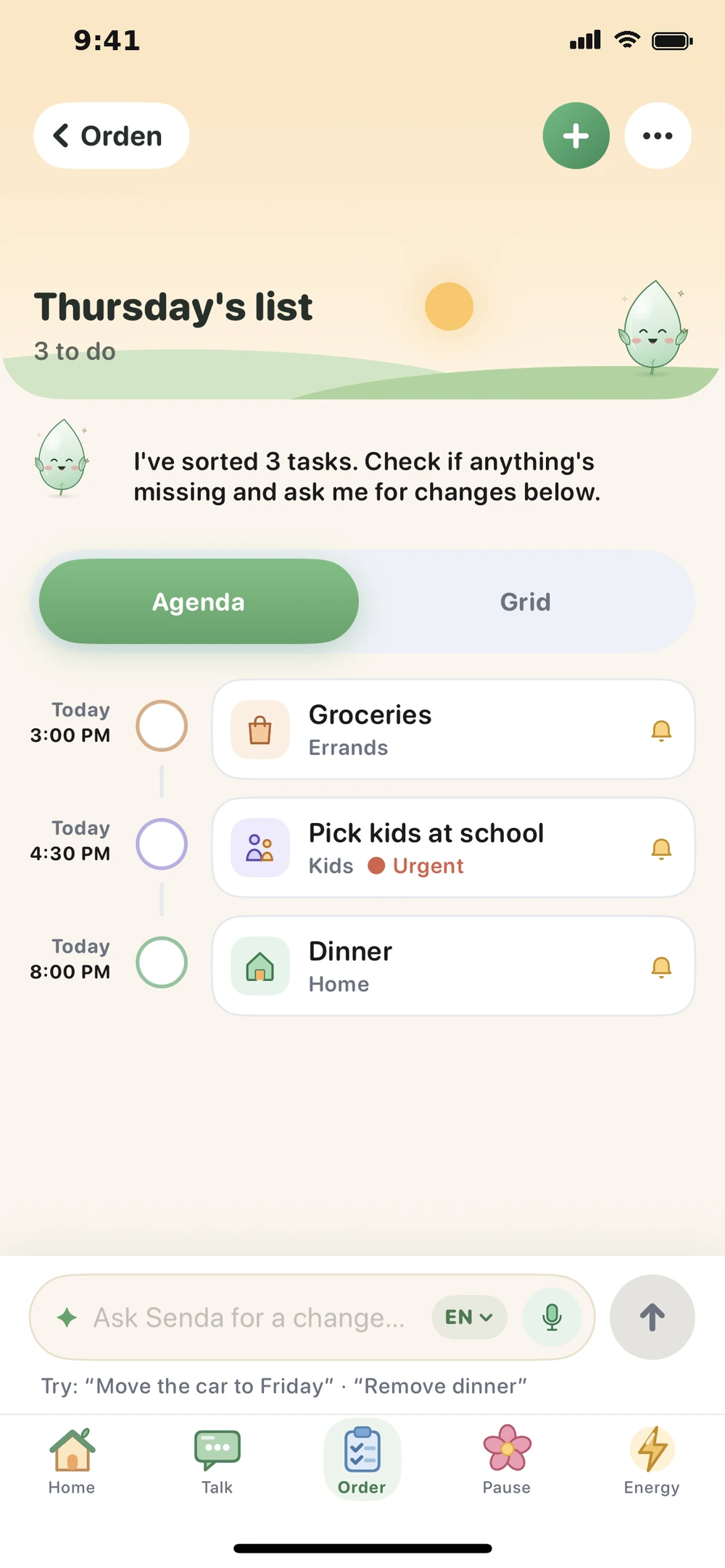
Senda turns a voice brain dump into a plan. In Order, tap the microphone and say everything at once; Senda creates the tasks with times, categories and reminders, and you can fix anything by saying "move dinner to 9".
- Worries that are not tasks? Take them to Talk and say them out loud, without judgment.
- Your plan shows up on the home screen with what's next.
Free plan, no card needed. 3-day free trial.
Frequently asked questions
What is a brain dump?
A brain dump is the habit of writing or saying everything on your mind, tasks and worries, without sorting it, so your head can let go and you can plan clearly.
How long should a brain dump take?
Five minutes is usually enough. Set a timer, get everything out, and sort it afterwards.
Can I do a brain dump by voice?
Yes. Speaking is often faster than writing. Apps like Senda turn a spoken brain dump into a list of tasks with times and reminders.
What is the difference between a brain dump and a to-do list?
A brain dump is everything in your head, unsorted. A to-do list is the short, sorted plan you make from it. Dump first, then choose what goes on the list.
Is it better to write a brain dump by hand or on the phone?
Use whatever is fastest for you. Writing by hand can feel calmer; dictating on the phone is quicker when your hands are busy. What matters is getting everything out in one place.
Sources
Keep reading



Senda is a self-care and organization companion, not a medical service. This guide is informational and does not replace advice from a qualified professional.