
In short
- Feeling tired, low or bloated in the days before your period is common, and the NHS lists tiredness among the symptoms of PMS.
- It is linked to the hormone changes of the cycle, and often eases once your period starts.
- Planning lighter days, gentle movement and regular sleep can help. Severe symptoms deserve a doctor's visit.
Why you feel tired before your period
Premenstrual syndrome (PMS) is the name for the physical and emotional symptoms many women have in the days or weeks before their period. The NHS lists tiredness, mood swings, feeling irritable or upset, bloating, breast pain, headaches, spotty skin and changes in appetite among the common symptoms.
The exact cause is not fully understood, but symptoms are linked to the changes in hormone levels during the menstrual cycle. They usually improve once the period starts.
Signs it is PMS fatigue
- It shows up at the same point of your cycle, month after month.
- It comes with other symptoms: mood changes, bloating, cravings, sore breasts.
- It eases within a few days of your period starting.
Tracking your symptoms for two or three cycles is the easiest way to see the pattern. The NHS suggests keeping a symptom diary.
What can help day to day
- Plan lighter days. If you know when the tired days come, avoid stacking demanding tasks on them.
- Keep moving gently. Regular exercise is one of the things the NHS suggests for PMS. A walk counts.
- Protect your sleep: regular times and a short wind-down.
- Eat regularly, with smaller, more frequent meals if you feel low between them.
- Lower the caffeine and alcohol if they make your sleep or mood worse.
- Tell the people around you. "This week I'll be more tired" helps everyone.
A symptom diary you can copy
The NHS suggests keeping a diary of your symptoms for at least two or three cycles. A simple version:
| Date | Cycle day | Energy (1–5) | Mood | Symptoms | Sleep (hours) |
|---|---|---|---|---|---|
| 3 Nov | 22 | 2 | Irritable | Bloating, headache | 6 |
| 4 Nov | 23 | 2 | Low | Cravings | 6.5 |
| 5 Nov | 24 | 3 | OK | Sore breasts | 7 |
After a few cycles, look for the days that repeat. That is your personal "plan lighter" window, and it is also useful information to take to your doctor.
Plan your PMS week in advance
Once you know your pattern:
- Move demanding tasks (big presentations, difficult conversations) to the week after your period where you can.
- Batch-cook or plan easy meals for the tired days.
- Book something restful: an early night, a walk, a bath.
- Tell your partner or family which days are usually harder, so they can take more of the load.
Common mistakes
- Assuming it is "just PMS" when it doesn't follow your cycle. Tiredness every day of the month has other causes worth checking.
- Pushing through with extra caffeine. It can make sleep and mood worse.
- Skipping meals when busy. Long gaps can make low energy and irritability worse.
- Not mentioning it to a doctor because "it's normal". If it affects your life, it deserves attention.
PMS or PMDD?
Premenstrual dysphoric disorder (PMDD) is a more severe form of PMS. Symptoms can include very low mood, anxiety, anger or feeling out of control in the days before a period, enough to affect relationships and work. If this sounds familiar, talk to your doctor: it is recognised and can be treated.
Read next: Senda vs Clue: a science-led cycle tracker or a companion for your whole day?
When to see a doctor
Talk to your doctor if symptoms are affecting your daily life, work or relationships, if self-help doesn't improve them, or if you feel very low or anxious before your period. Some women have a more severe form called premenstrual dysphoric disorder (PMDD), which can be treated. Tiredness that doesn't follow your cycle, or doesn't go away, is also worth checking, as there can be other causes such as low iron or thyroid problems.
 How Senda helps
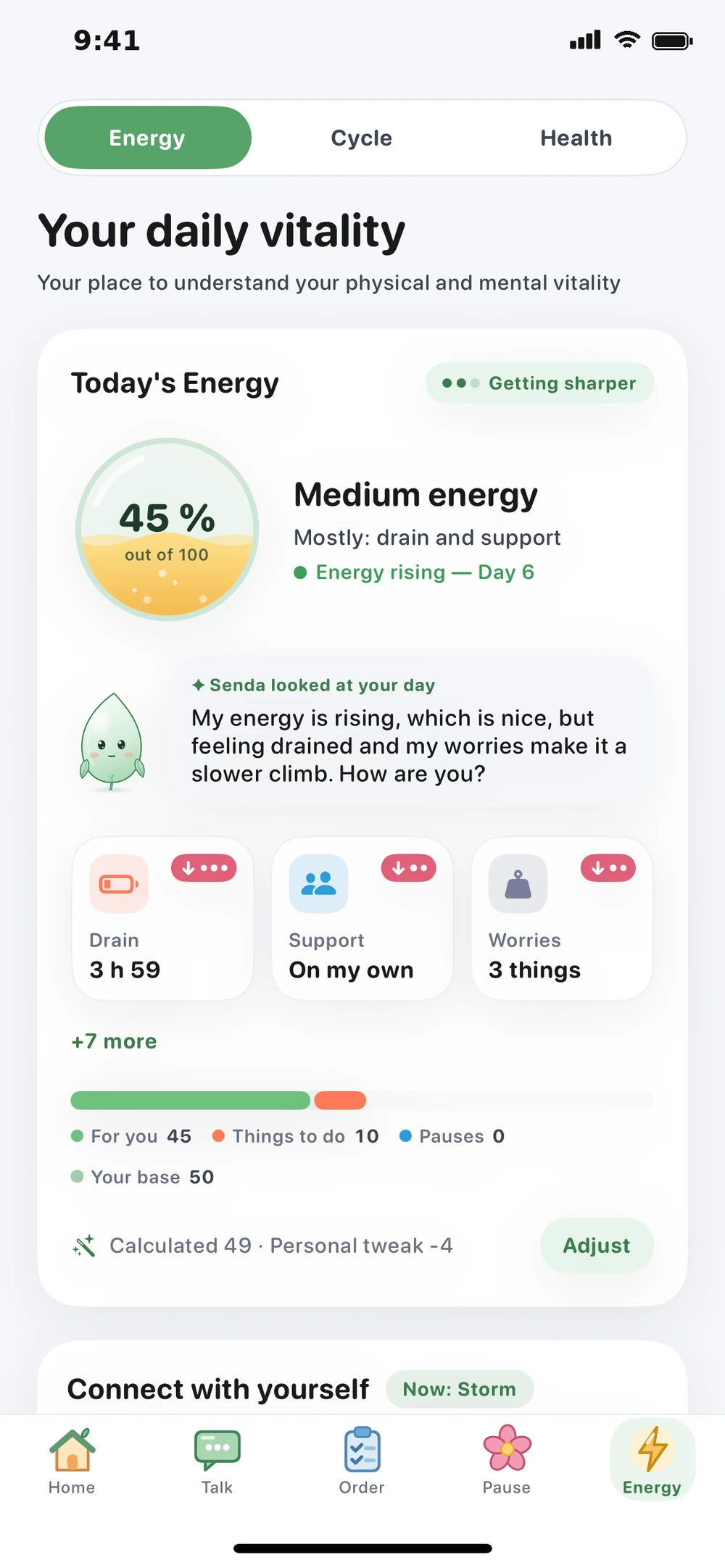
Senda shows your energy for the day from your sleep, your plans and your cycle, in plain words, and learns from you. Connect Apple Health if you want sleep and steps to count.
- Plan lighter on low days, with Order.
- Take a real break when your level drops.
- Vent in Talk when you don't know why you feel off.
Free plan, no card needed. 3-day free trial.
Frequently asked questions
Is it normal to feel tired before your period?
Yes. Tiredness is a common symptom of PMS and is linked to hormone changes in the cycle. It usually improves once your period starts.
How long before my period does PMS fatigue start?
PMS symptoms can start up to two weeks before a period. Tracking your symptoms for a few cycles shows your own pattern.
When should I see a doctor about PMS tiredness?
If it affects your daily life, if self-help doesn't improve it, if you feel very low or anxious, or if the tiredness doesn't follow your cycle.
Can PMS make you feel exhausted?
Yes. Tiredness is one of the most common PMS symptoms. If you feel exhausted most of the month, not just before your period, see a doctor to check for other causes.
What is the difference between PMS and PMDD?
PMDD is a more severe form of premenstrual symptoms, with very low mood, anxiety or anger that seriously affects daily life. It is recognised and treatable, so talk to your doctor if it sounds familiar.
Sources
Keep reading

Senda is a self-care and organization companion, not a medical service. This guide is informational and does not replace advice from a qualified professional.