

In short
- Hormones change across the cycle, and many women notice shifts in energy, sleep and mood.
- Patterns are personal: tracking your own cycle tells you more than any general rule.
- Use what you notice to plan, not to restrict: heavier tasks on stronger days, more rest on lower ones.
The menstrual cycle in brief
A menstrual cycle usually lasts between 21 and 35 days, counted from the first day of one period to the day before the next. Hormones such as oestrogen and progesterone rise and fall across it. These changes can affect sleep, appetite, mood and how energetic you feel.
The NHS explains that symptoms such as tiredness, mood changes or bloating before a period are common.
The phases and how they may feel
Period (menstrual phase)
Hormone levels are low at the start. Many women feel more tired, especially if periods are heavy or painful, and appreciate slower days.
After your period (follicular phase)
Oestrogen rises. Many women notice energy and motivation gradually increasing in these days.
Around ovulation
In a typical cycle this happens about two weeks before the next period. Some women feel at their most energetic and social; others notice little difference.
Before your period (luteal phase)
Progesterone rises and then both hormones fall before the next period. Some women notice tiredness, low mood, bloating or trouble sleeping in the last days, often described as premenstrual symptoms.
Everyone is different
Research on energy across the cycle is mixed, and cycles vary from person to person and month to month. Stress, sleep, illness, contraception, breastfeeding and life stages like perimenopause all change the picture. That's why noticing your own pattern matters more than following a generic plan.
How to use it in daily life
- Track a few months of how you feel, not just your period dates.
- Plan heavier tasks on days that usually feel stronger.
- Leave margin on days that usually feel lower: fewer commitments, more breaks.
- Be kind to yourself on harder days; tiredness is information, not failure.
How each phase may feel, at a glance
Every woman is different, and many feel no big change at all. Use this as a starting point, then compare it with your own notes:
| Phase (approx. days in a 28-day cycle) | How some women describe it | Ideas that may help |
|---|---|---|
| Period (days 1–5) | Tired, cramps, wanting to slow down | Lighter plans, gentle movement, warmth, earlier nights |
| After the period (days 6–13) | Energy often rising, more sociable | Good days for demanding tasks and new plans |
| Around ovulation (around day 14) | Some feel at their best; some notice mild pain | Meetings, social plans, exercise you enjoy |
| Before the period (days 15–28) | Energy may dip, mood swings, cravings, bloating | Fewer commitments in the last days, regular meals, sleep |
According to the NHS, cycles between 21 and 40 days can be normal, so your phases may be shorter or longer.
How to track your own pattern in 3 cycles
- Each day, note three things: energy (low, medium, high), mood in one word, and any symptoms.
- Mark day 1 of each period.
- After three cycles, look for repeats: days that are usually harder or easier.
- Plan with it: move demanding tasks away from your usual low days where you can.
Common mistakes
- Treating the phases as rules. They are averages. Your own notes matter more.
- Blaming everything on hormones. Sleep, stress and illness also change your energy.
- Pushing through every low day. Planning a lighter day is not weakness; it is good planning.
- Ignoring symptoms that disrupt your life. Very heavy, painful or irregular periods deserve a doctor's visit.
Life stages change the pattern
Pregnancy, the months after birth, breastfeeding and perimenopause can all change your cycle and your energy. If your periods change suddenly or you are unsure what is normal for you, ask your doctor.
Read next: Tired before your period? PMS fatigue, why it happens and what helps · Senda vs Clue: a science-led cycle tracker or a companion for your whole day?
When to see a doctor
See a GP if your periods are very painful or heavy, irregular, if premenstrual symptoms seriously affect your life, or if tiredness is constant regardless of the cycle.
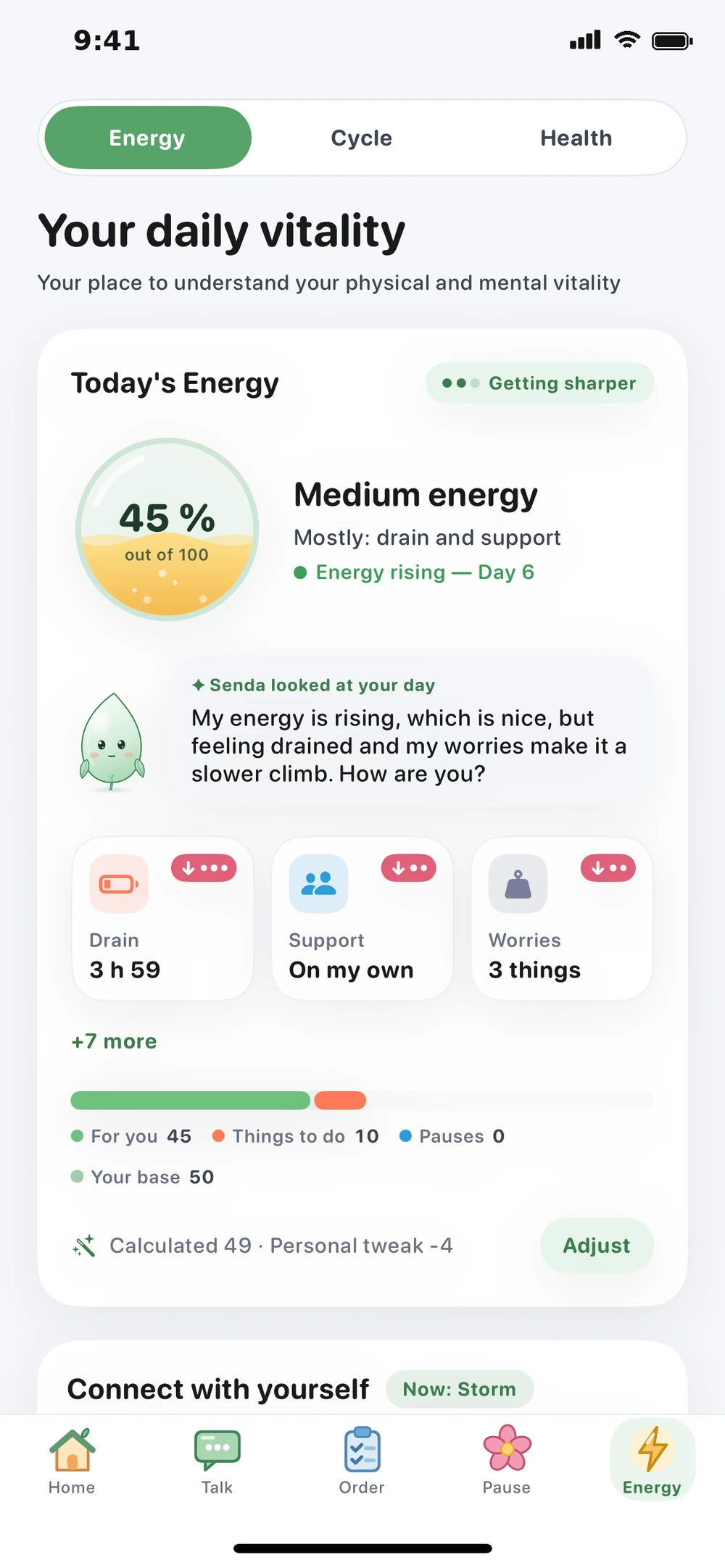
 How Senda helps
Senda connects your energy and your cycle in one place.
- See your daily energy with the main reason behind it: sleep, your plans or your cycle, in plain words.
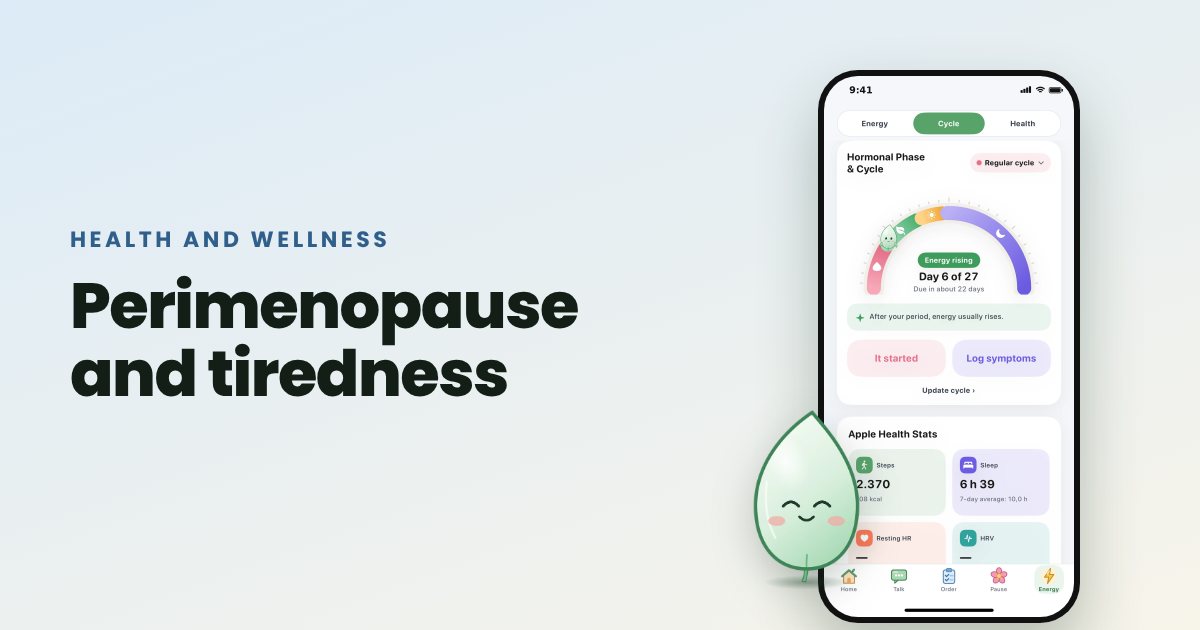
- Follow your cycle at every stage: regular cycle, pregnancy, postpartum, perimenopause and menopause, and log symptoms.
- With your permission, Senda reads sleep and steps from Apple Health, and learns your pattern over time.
Free plan, no card needed. 3-day free trial.
Frequently asked questions
Does the menstrual cycle affect energy?
Hormones change across the cycle and many women notice energy, sleep and mood shifts, often lower around their period and higher in the days after it. Patterns differ between people.
When in my cycle do I have the most energy?
Many women feel more energetic in the days after their period and around ovulation, but this varies. Tracking your own cycle for a few months shows your pattern.
Why am I so tired before my period?
Hormones fall before a period, which can affect sleep and mood. If tiredness is severe or constant, talk to a doctor to rule out other causes.
Is it normal to have more energy at certain times of the month?
Many women notice their energy changes across the cycle, often higher after the period and lower in the days before it. Others notice little difference. Tracking for a few cycles shows your own pattern.
How long is a normal menstrual cycle?
According to the NHS, the average cycle is 28 days, but cycles between 21 and 40 days can be normal. See your doctor if your periods change or worry you.
Sources
Keep reading

Senda is a self-care and organization companion, not a medical service. This guide is informational and does not replace advice from a qualified professional.