

In short
- You don't have to stop moving during your period or on low-energy days; you can adapt.
- Let your energy decide the intensity, not a strict plan.
- Any movement counts: the WHO recommends 150 to 300 minutes of moderate activity a week for adults.
Movement without another obligation
Exercise often turns into one more thing to get right. On a tired day, the gap between your plan and your energy can make you skip it entirely. Adapting the intensity, instead of the habit, keeps you moving.
What the guidelines say
The World Health Organization recommends that adults do 150 to 300 minutes of moderate activity a week, or 75 to 150 minutes of vigorous activity, plus muscle strengthening twice a week. Spread across a week, that can be short sessions and walks.
Adapting to your cycle and energy
On your period or low days
Gentle options: walking, stretching, easy yoga, a relaxed swim or bike ride. Some women find light movement eases cramps; others prefer rest. Both are valid.
After your period and on stronger days
Many women feel ready for more: a longer run, strength training, a dance class. If you feel good, go for it.
Before your period
If you feel heavier or more tired, lower the intensity, shorten the session or swap for a walk. Keep the habit, change the dose.
Listen to your body, not a rule
"Cycle syncing" plans can be useful as ideas, but research is limited and every body is different. Your own energy on the day is the best guide.
Simple ways to fit it in
- 10-minute walks after meals or between tasks.
- Movement snacks: a few squats while the kettle boils, stairs instead of the lift.
- One "fun" session a week with a friend or a class you enjoy.
You may also like: A 10-minute home workout for busy days: no equipment, no gym, no excuses needed
When to check with a doctor
If exercise causes pain, dizziness or unusual breathlessness, or if your periods change a lot with training, talk to a doctor.
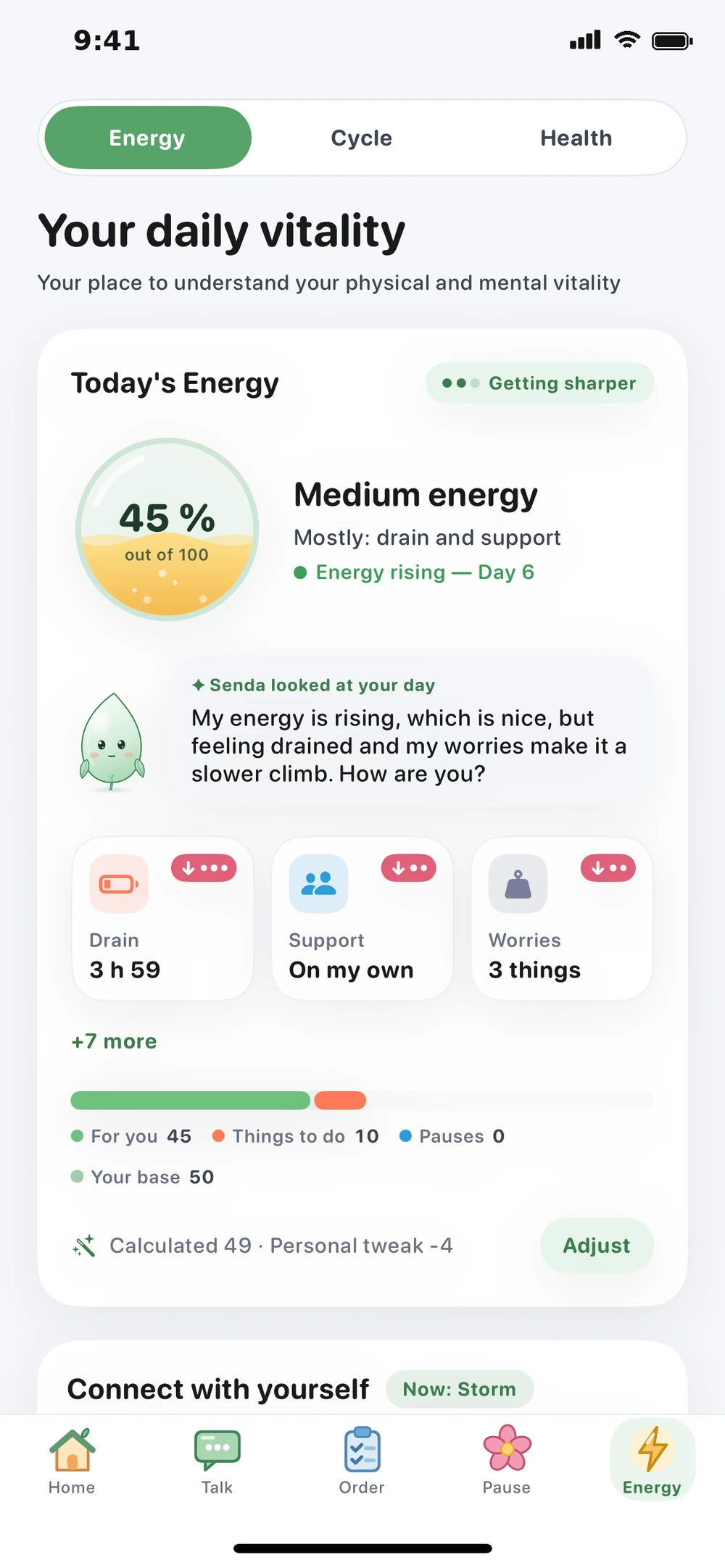
 How Senda helps
Senda helps you match movement to your day.
- Check your energy for today, with the main reason behind it, before you choose a workout.
- See where you are in your cycle and what usually happens next.
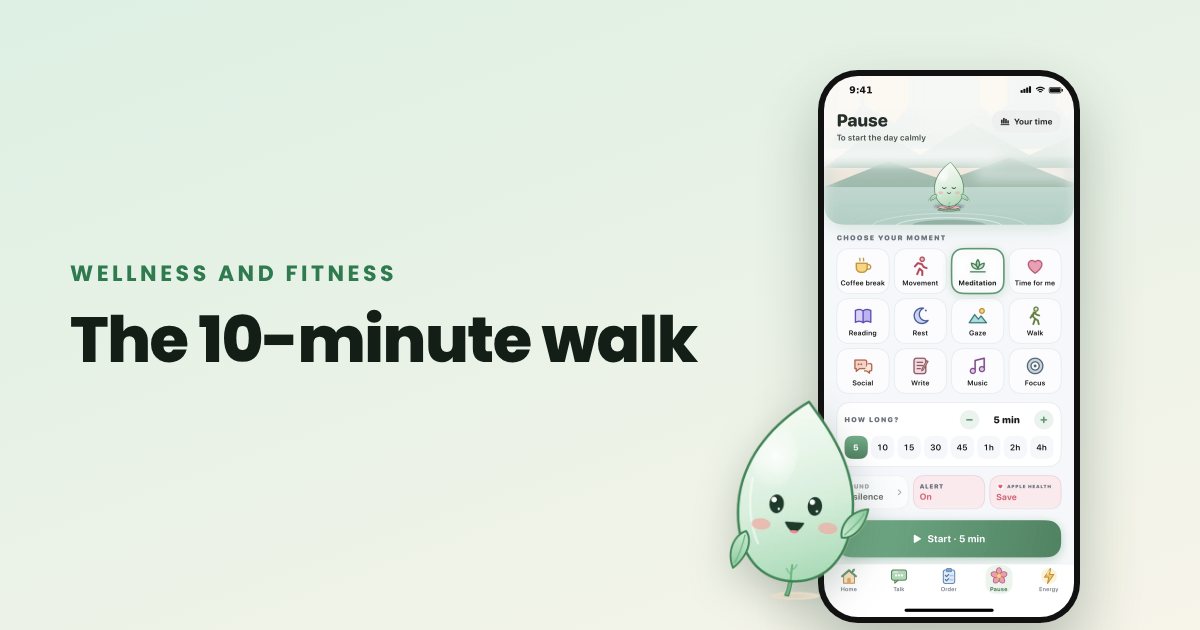
- Choose a Movement or Walk pause from 5 minutes, and save it to Apple Health.
Free plan, no card needed. 3-day free trial.
Frequently asked questions
Should I exercise during my period?
You can if you feel like it. Gentle movement like walking or stretching helps some women; others prefer rest. Let your energy guide you.
Does cycle syncing your workouts work?
Research is limited. Adjusting intensity to how you feel on the day is a simpler and more reliable guide than a fixed plan.
How much exercise do I need per week?
The WHO recommends 150 to 300 minutes of moderate activity a week for adults, plus muscle-strengthening activities twice a week.
Sources
Keep reading


Senda is a self-care and organization companion, not a medical service. This guide is informational and does not replace advice from a qualified professional.