
In short
- Mental load is how much you carry; burnout is the exhaustion that can follow when you carry too much for too long.
- Early signs: tiredness that sleep doesn't fix, feeling detached, and getting less done despite trying harder.
- Lightening the load early, building in pauses and asking for help make a real difference.
Two different things that often go together
Mental load is the invisible work of keeping everything in mind. Burnout is a state of exhaustion. The World Health Organization describes burnout in the workplace with three features: feeling depleted, feeling distant or cynical, and feeling less effective.
Many women describe the same pattern at home: the load builds up quietly until one day there is nothing left.
Signs it is mental load
- Your head is full of lists, dates and "don't forget".
- You feel stretched, but you recover after a good night or a weekend.
- You still enjoy things when you get the time.
Signs it may be turning into burnout
- Tiredness that sleep and rest don't fix.
- Feeling detached, numb or irritable with the people you love.
- Getting less done even when you try harder.
- Headaches, tension or trouble sleeping that keep coming back.
- Thinking "I can't do this anymore" more days than not.
What helps at each stage
While it is still load
Get the list out of your head, share whole areas of responsibility and protect small breaks every day. These are easier to start before exhaustion sets in.
If you recognize burnout signs
Reduce what you can, even temporarily. Tell someone you trust how you really are. Speak to a GP or a mental health professional: burnout is common and there is help for it.
Mental load or burnout: side by side
| Mental load | Burnout | |
|---|---|---|
| What it is | The work of noticing, planning and remembering | A state of deep exhaustion after long-term stress |
| How it feels | Busy head, lists that never end | Empty, detached, nothing left to give |
| After a good weekend | You feel better | You feel almost the same |
| What helps most | Sharing the thinking, not just the tasks | Lowering demands, rest, support and often professional help |
Researchers Christina Maslach and Michael Leiter describe burnout as exhaustion together with cynicism or detachment and a sense of reduced effectiveness. Mental load can be one of the long-term pressures that leads there.
A worked example
*This is an illustrative example, not a real user.* For two years, Beatriz has carried most of the planning at home and a demanding job. At first she felt busy and stretched. Lately she feels numb, snaps at her children and no longer enjoys weekends. That change, from busy to empty, is a signal. She talks to her doctor and, with her partner, moves school, meals and medical appointments to him for three months.
Common mistakes
- Treating burnout with better organisation. Lists help with mental load; burnout also needs less load and more rest.
- Waiting for a holiday. If the load stays the same after it, the exhaustion returns.
- Thinking it only counts if it is about paid work. Exhaustion from caring for others at home is real too.
When to get help
If you recognise several signs of burnout, such as exhaustion that rest does not fix, feeling detached or numb, and a sense that nothing you do is enough, and they have lasted more than a couple of weeks, talk to your doctor. Burnout often overlaps with depression and anxiety, which can be treated. If you ever have thoughts of harming yourself, contact your local emergency number straight away.
You may also like: Parental burnout: the signs, the causes and what actually helps
A simple weekly check-in
Once a week, ask yourself three questions: What drained me most? What gave me a bit of energy? What can I drop, delay or hand over next week? Writing the answers down turns a vague feeling into something you can act on.
 How Senda helps
Senda helps you notice patterns before they become exhaustion.
- Check in each morning with how you woke up; Senda shows your energy for the day using your sleep, your plans and your cycle.
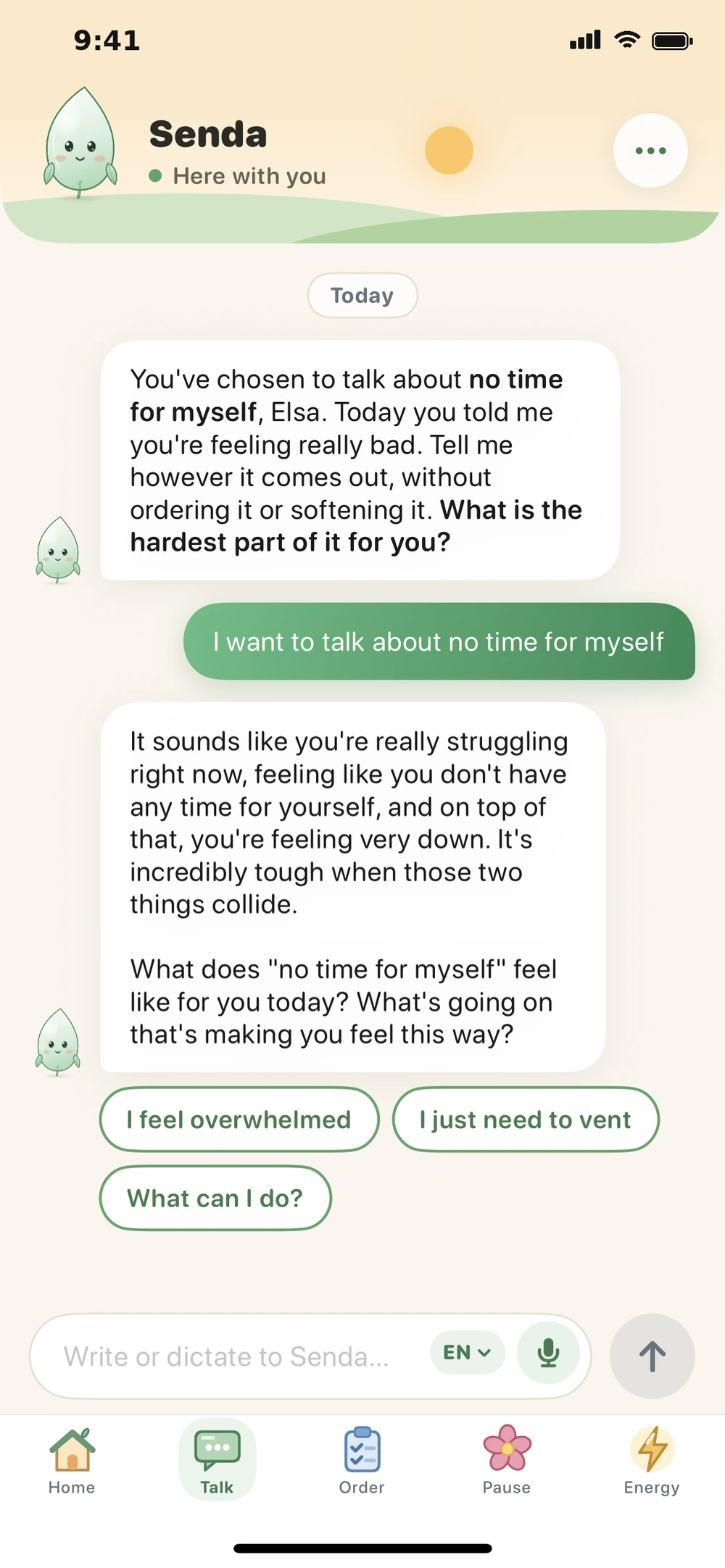
- Talk it through in Talk, without judgment, any time of day.
- Hand your tasks to Senda by voice and see them sorted, so they stop circling in your head.
Free plan, no card needed. 3-day free trial.
Frequently asked questions
What is the difference between mental load and burnout?
Mental load is the amount of invisible planning work you carry. Burnout is a state of exhaustion, detachment and reduced effectiveness that can follow long periods of overload.
Can mental load cause burnout?
Carrying a heavy load for a long time, with little rest or support, can contribute to burnout. Lightening it early is one of the best ways to protect yourself.
When should I see a professional?
If exhaustion, low mood or anxiety last for weeks, affect your sleep or relationships, or you feel you cannot cope, talk to a GP or a mental health professional.
Can you get burnout from being a mom?
Yes. Parental burnout is a recognised term in research. Long-term exhaustion from caring for children and running a home, with little support, can lead to it.
Does a holiday cure burnout?
A break can help you recover a little, but if the load and the pressure stay the same afterwards, the exhaustion usually returns. Lasting change means lowering demands and getting support.
Sources
- World Health Organization: Burn-out an "occupational phenomenon" (ICD-11)
- Ciciolla, L. & Luthar, S. (2019). Invisible Household Labor and Ramifications for Adjustment. Sex Roles
- Maslach, C. & Leiter, M. P. (2016). Understanding the burnout experience: recent research and its implications for psychiatry. World Psychiatry
Keep reading


Senda is a self-care and organization companion, not a medical service. This guide is informational and does not replace advice from a qualified professional.