
In short
- Parental burnout is exhaustion linked to the parenting role, not just a bad week.
- Researchers describe it as a long-term imbalance between the demands on a parent and the resources they have to cope.
- It improves when you reduce demands and add resources: help, rest, support and less pressure to be perfect.
What is parental burnout?
Parental burnout is a state of intense exhaustion related to being a parent. Researchers Moïra Mikolajczak and Isabelle Roskam, who have studied it for years, describe it with four features: overwhelming exhaustion in your role as a parent, emotional distance from your children, feeling you are no longer the parent you used to be, and a sharp contrast with how you were before.
It is not a sign that you love your children less. It usually happens to parents who care a lot and have been carrying too much for too long.
The signs
- You wake up tired at the thought of the day with the kids.
- You do the care tasks on autopilot, with little energy left to enjoy them.
- You feel you have nothing more to give, even on calm days.
- You don't recognise yourself: more irritable, less patient, more distant.
- You feel guilty, and the guilt adds to the exhaustion.
Why it happens
In their model, burnout appears when risks outweigh resources for a long time. Risks include lack of sleep, little support, high expectations of yourself, financial or work pressure, a child with high needs and carrying most of the mental load at home. Resources include rest, help from others, time for yourself, support from a partner and being able to lower the bar without guilt.
How it differs from normal tiredness
Normal parenting tiredness comes and goes. A weekend away or a few good nights helps. Burnout lingers. Rest helps a little, then it comes back, and the distance from your role grows.
What helps
- Lower the demands. What can be simpler for a few weeks? Meals, plans, extracurriculars, standards at home.
- Ask for concrete help. Not "help me more", but "you do bedtime on Tuesdays and Thursdays".
- Protect a small daily break. Ten minutes where nobody needs you is a resource, not a luxury.
- Share the invisible work. Write down what you keep in your head and hand over whole areas.
- Talk to other parents. Hearing "me too" eases the shame that keeps burnout going.
- Notice the perfectionism. "Good enough" parenting is enough.
When to seek help
If you feel empty most days, think about escaping, or feel you could hurt yourself or your child, talk to a doctor or mental health professional now. If you are in danger, call your local emergency number. Asking for help is a way of caring for your family.
 How Senda helps
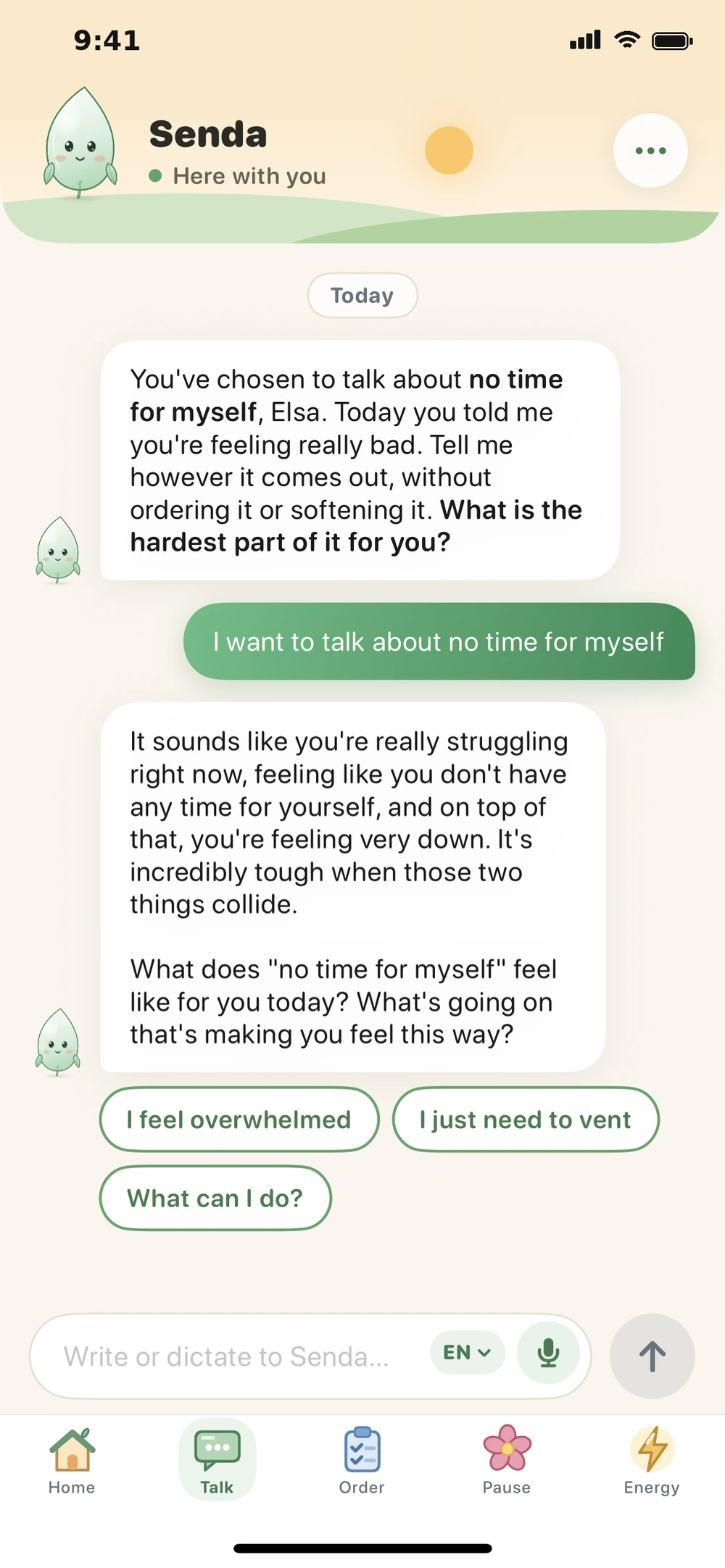
In Talk, you can say how you really are, any time, without judgment. Senda listens first and replies with your day in mind: your energy, your cycle and what is on your plate.
- Empty your head in Order: dictate everything and get a plan with dates and reminders.
- See your energy for today, so you can plan around it.
- Take a real break, from 5 minutes to 4 hours.
Free plan, no card needed. 3-day free trial.
Frequently asked questions
What is parental burnout?
It is intense exhaustion linked to the parenting role, with emotional distance from your children and the feeling of not being the parent you used to be. It comes from a long imbalance between demands and resources.
Is parental burnout the same as postpartum depression?
No. They can overlap, but parental burnout is tied to the demands of parenting over time and can happen at any stage. If you are unsure, talk to your doctor.
How do you recover from mom burnout?
By lowering demands, getting concrete help, protecting small daily breaks and sharing the mental load. If it doesn't improve, a professional can help.
Sources
Keep reading


Senda is a self-care and organization companion, not a medical service. This guide is informational and does not replace advice from a qualified professional.