

In short
- A big part of motherhood is invisible: anticipating, remembering, deciding and worrying ahead.
- Invisible work is hard to share because nobody sees it. Writing it down is the first step to sharing it.
- Your needs count too. Making room for yourself is part of the work, not a reward for finishing it.
The work nobody writes down
Before a child gets to school with a packed lunch, signed form and clean sports kit, someone noticed the form, checked the kit, planned the lunch and set a reminder. That someone is often the mother, and almost none of it shows.
Researchers call it invisible labor. A study of more than 300 mothers found that feeling responsible for managing the household, like being the "captain" of the home, was linked to feeling more overwhelmed and emptier, regardless of who physically did the tasks.
Sociologist Allison Daminger calls this cognitive labor: anticipating needs, deciding and keeping track.
Why it is so tiring
- It never stops. Thinking ahead happens at work, in the shower and at 2 a.m.
- It is not recognized. Finished tasks look like they happened on their own.
- It is hard to delegate. You can hand over a task, but if you still have to remember it, the load stays with you.
How to make it visible
1. Make a list of everything
For one week, write down every invisible job as it comes up: booking appointments, buying gifts, tracking vaccines, noticing shoe sizes, planning meals, keeping the family calendar. Most people are surprised by how long it gets.
2. Group it into areas
School, health, food, clothes, celebrations, home, family relationships. Areas are easier to share than hundreds of small tasks.
3. Share areas, not favors
"Can you buy the gift?" keeps you as the manager. "You own birthdays this term, from invitations to gifts" moves the whole load.
4. Agree on "good enough"
Part of the load is perfectionism. If someone else owns an area, they get to do it their way.
What the invisible work looks like by age
| Child's age | Invisible work that often lands on the mother |
|---|---|
| Baby | Feeds, nappies supply, vaccinations, sleep, weighing appointments |
| Toddler | Nursery, spare clothes, birthday parties, illnesses, new shoes |
| School age | Forms, homework, trips, after-school activities, friendships, uniforms |
| Teenager | Worries, schedules, money, exams, health appointments, emotions |
The tasks change, but the job of noticing and planning stays. That is why many mothers say it never really gets lighter, it just changes shape.
A worked example
*This is an illustrative example, not a real user.* Silvia writes down, for one week, everything she thinks about for her two children. The list has 47 lines, and only 9 involve doing something; the rest is noticing, remembering and deciding. She shows it to her partner, who takes over two areas completely: after-school activities and the paediatrician. Two weeks later, her list is down to 31 lines.
Common mistakes
- Asking for help with tasks but keeping the thinking. Hand over whole areas so someone else also notices and plans.
- Doing it because "it is quicker". It is quicker today, and heavier every day after.
- Measuring yourself against other mothers who seem to manage everything. You only see their outside.
One small step this week
Pick one area from the table, the one that takes most space in your head, and hand it over completely: the planning, the reminders and the doing. Agree how long the handover lasts, for example a month, and resist checking. It will be done differently. That is fine. The goal is not a perfect result, it is one less thing living in your head.
Also useful: Parental burnout: the signs, the causes and what actually helps
Make space for you
Mothers often put their own needs at the end of the list. A short pause, a walk or ten minutes to say how you feel is not a luxury. It is what lets you keep going.
 How Senda helps
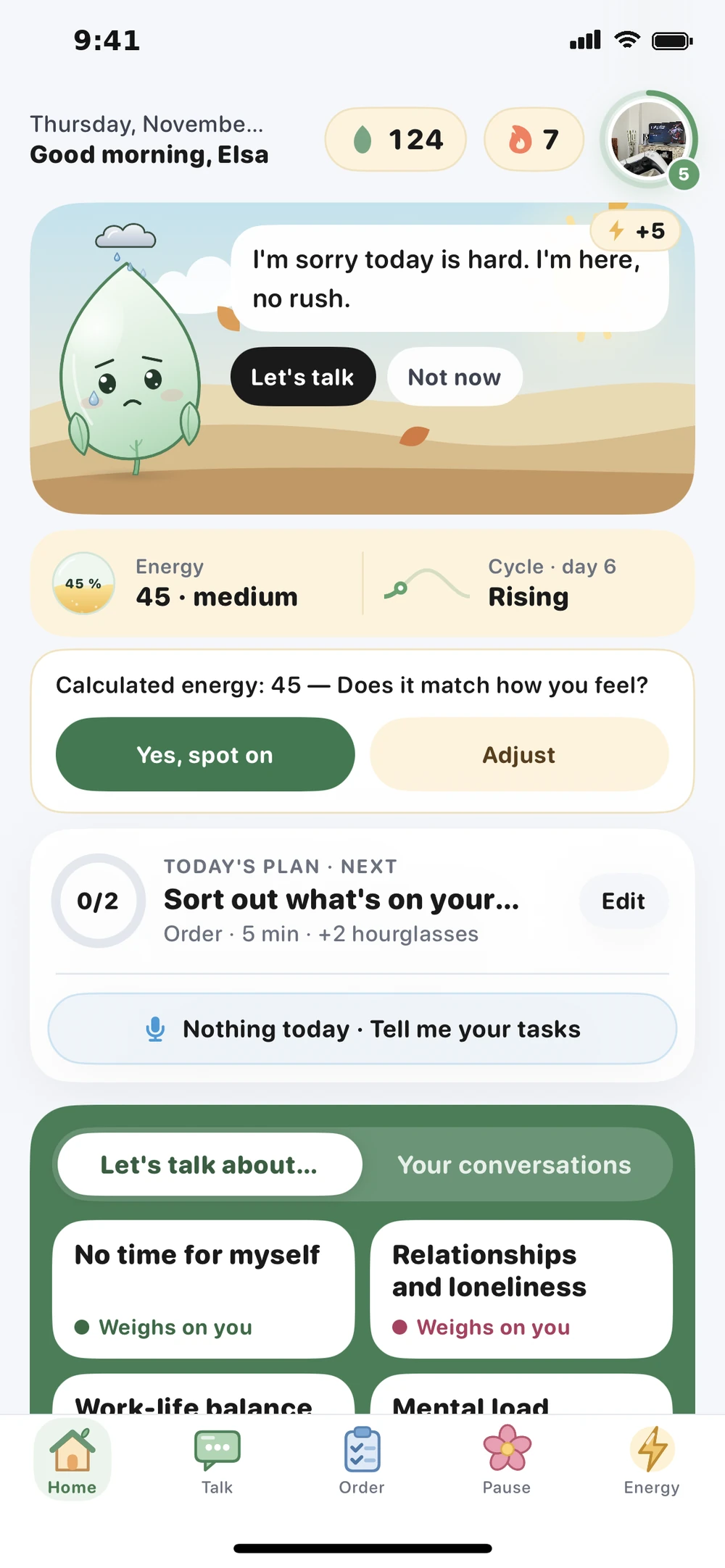
Senda gives your invisible work somewhere to go.
- Dictate it all in Order ("vaccines for Leo in March, Lucía's party invites, buy rice") and Senda files it by category with reminders.
- Talk about how you really are, not just how the baby is, in Talk.
- Take a pause just for you, from 5 minutes to 4 hours, with calm sound.
Free plan, no card needed. 3-day free trial.
Frequently asked questions
What is the invisible work of motherhood?
It is the planning, remembering, anticipating and emotional work that keeps a family running, like booking appointments, tracking school dates or noticing what a child needs, which rarely gets seen or recognized.
How can I share the mental load with my partner?
Write down all the invisible tasks for a week, group them into areas and hand over whole areas, from start to finish, instead of asking for help with single tasks.
Why do mothers feel so tired?
Besides physical tasks, mothers often carry constant planning and worry in the background. That invisible load is tiring even on days that look calm from the outside.
Why does motherhood feel so overwhelming?
Because on top of the visible care there is a constant job of noticing, planning and remembering for every child, which rarely stops and is often not shared.
How do I get my partner to see the invisible work?
Write down everything you think about for a week, show the list in a calm moment and ask your partner to own whole areas, including the planning and remembering.
Sources
Keep reading




Senda is a self-care and organization companion, not a medical service. This guide is informational and does not replace advice from a qualified professional.