
In short
- "What's for dinner?" is one of the most repeated decisions of the week. Plan it once and it stops following you around.
- Use theme nights, repeat what works and keep the list short. Variety can come from small changes.
- Meal planning is a great job to share: whoever plans also writes the list.
Why meal planning lightens the load
Dinner is not one decision. It is checking what's in the fridge, thinking of something everyone will eat, remembering who has a late activity and buying what's missing. Doing that every day is a big part of the mental load. Planning the week once removes most of it.
A simple system in 4 steps
1. Choose theme nights
Give each night a theme so you're not starting from zero:
- Monday: pasta
- Tuesday: soup or one-pot
- Wednesday: eggs or tortilla
- Thursday: rice or bowls
- Friday: homemade pizza or wraps
- Weekend: something slower, or leftovers night
2. Pick meals that fit your week
Look at the calendar. Late activity on Tuesday? That's the night for something quick or prepared in advance. Keep one "emergency" option in the freezer.
3. Write one short list
Group it by aisle: fruit and veg, fresh, pantry, frozen. Check the fridge first. A short list means a shorter shop and less waste.
4. Cook a little ahead
You don't need a full Sunday of batch cooking. Two things are enough: wash and chop vegetables, and cook one base (rice, lentils, a tomato sauce) that works for two dinners.
Keeping it balanced without overthinking it
The NHS Eatwell Guide suggests basing meals on starchy foods, eating plenty of fruit and vegetables, and including some protein such as beans, fish, eggs or meat. A simple rule for a plate: half vegetables, a quarter carbs, a quarter protein. It doesn't have to be perfect every night.
A template you can copy
| Day | Theme | Dinner | Prep note |
|---|---|---|---|
| Monday | Pasta | Pasta with tomato sauce and tuna | Sauce made on Sunday |
| Tuesday | One-pot | Lentil stew | Late swimming: make it the night before |
| Wednesday | Eggs | Tortilla and salad | — |
| Thursday | Bowls | Rice, chicken and vegetables | Use Sunday's rice |
| Friday | Pizza | Homemade pizza | Kids add toppings |
| Saturday | Slow | Oven chicken and potatoes | — |
| Sunday | Leftovers | Whatever is left | Plan next week |
A sample week for a busy family
| Day | Dinner | Prep tip |
|---|---|---|
| Mon | Pasta with tomato sauce and vegetables | Make double sauce |
| Tue | Lentil soup with bread | Use the Sunday batch |
| Wed | Omelette, salad and potatoes | 20 minutes, no planning needed |
| Thu | Chicken and vegetable tray bake | One tray, oven does the work |
| Fri | Homemade pizza or takeaway | Planned treat night |
| Sat | Family favourite, cooked together | Kids help |
| Sun | Batch-cook: soup or stew for the week | Freeze portions |
A standing shopping list
Keep a list of what you always buy and only edit it each week. For example:
- Fresh: fruit, salad, two or three vegetables, eggs, milk, yoghurt.
- Cupboard: pasta, rice, lentils, tinned tomatoes, oil, bread.
- Protein: chicken, fish, beans, tofu or eggs, depending on your family.
- Freezer: frozen vegetables, a backup meal for chaotic days.
Common mistakes
- Planning seven new recipes. Repeat favourites; add one new dish a week at most.
- Ignoring the calendar. Late meetings and activities need quick or reheated dinners.
- Forgetting leftovers. Plan one "leftovers night" a week.
- Planning alone. Ask everyone for one dinner idea; it shares the thinking and reduces complaints.
- No backup. A frozen meal or eggs on hand saves the day when plans fall apart.
Get started in 15 minutes
On Sunday, check the week's calendar, choose the seven dinners, write the shopping list and decide who cooks which nights. Our free weekly meal planner has space for meals, the shopping list and who cooks.
You may also like: Decision fatigue: why small choices wear you out (and how to make fewer)
Share the job
Meal planning is easy to hand over as a whole area: one person plans the week, writes the list and checks the fridge. Rotate it every week or every month. Older children can choose one dinner each week, which also makes them more likely to eat it.
 How Senda helps
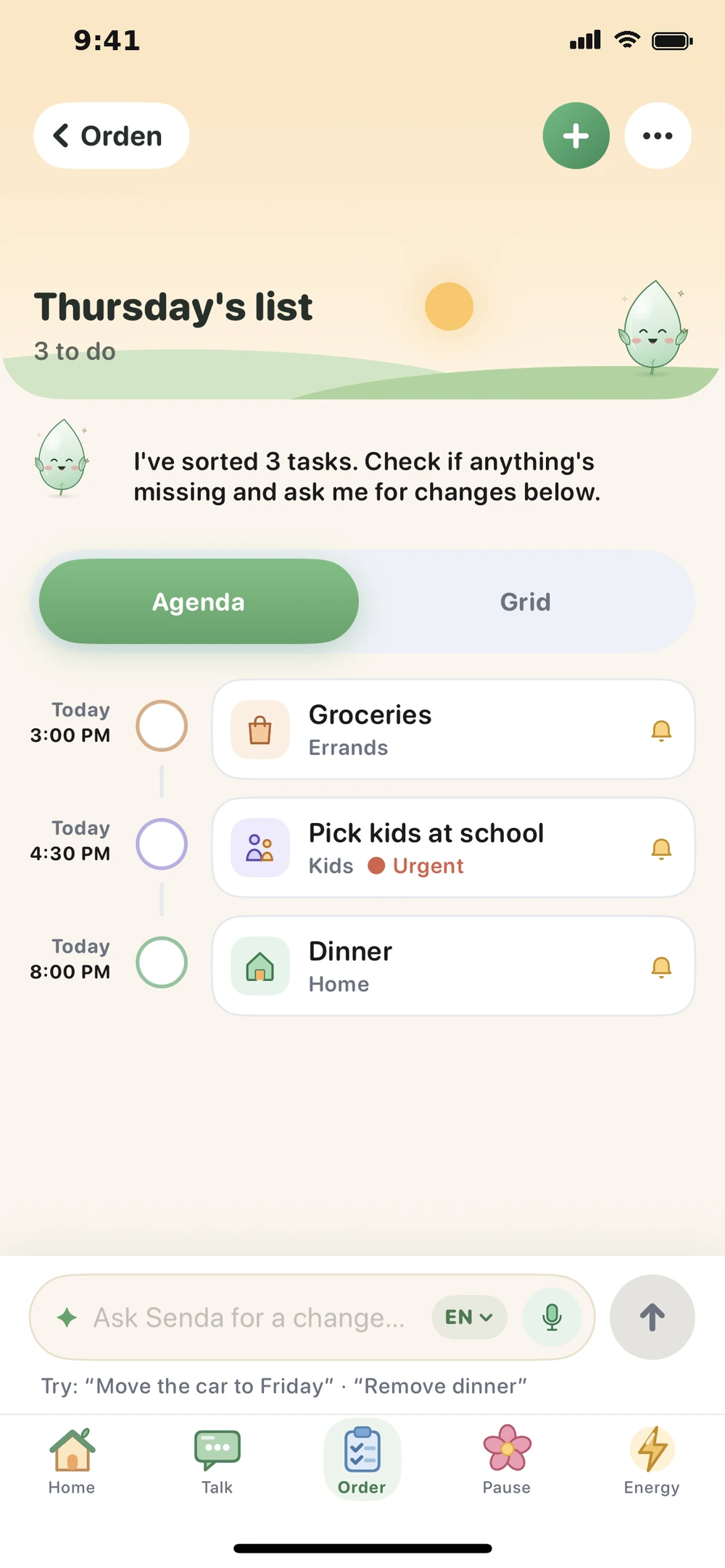
In Order, you dictate everything at once, however it comes out ("dentist Tuesday at 5, gift for Lucía, pay the gym") and Senda turns it into tasks with dates, categories and reminders. Change it just by saying so.
- Plan around your energy: Senda shows your level for the day.
- Vent in Talk when the list feels like too much.
- Protect a real break in your plan.
Free plan, no card needed. 3-day free trial.
Frequently asked questions
How do I start meal planning for my family?
Start with theme nights, look at your week to see which nights need something quick, then write one short shopping list grouped by aisle.
How many meals should I plan per week?
Plan five or six dinners and leave one night for leftovers or something simple. That leaves room for real life.
How can I make meal planning easier?
Repeat meals that work, cook one base ingredient ahead for two dinners, and share the job with someone else at home.
How do I start meal planning when I have no time?
Start small: plan only five dinners, repeat meals your family already likes and use a standing shopping list. Fifteen minutes on Sunday is enough.
How can I make meal planning cheaper?
Plan around what you already have, cook one batch meal for two nights, use seasonal vegetables and stick to the shopping list.
Sources
Keep reading



Senda is a self-care and organization companion, not a medical service. This guide is informational and does not replace advice from a qualified professional.