
In short
- Emotional exhaustion is feeling drained, with nothing left to give, even after rest.
- It is the core part of burnout in research by Christina Maslach and Michael Leiter.
- Recovery starts by lowering demands and rebuilding small reserves, and by asking for help early.
What emotional exhaustion feels like
Emotional exhaustion is a deep, lasting tiredness that sleep does not fix. You may feel you have nothing left to give, not to your children, your partner, your friends or your work. Small things feel huge. You cry more easily, or you feel nothing at all.
Psychologists Christina Maslach and Michael Leiter, whose work shaped how burnout is understood, describe exhaustion as the central part of burnout, together with cynicism or detachment and a sense of reduced effectiveness. The World Health Organization describes burn-out specifically as a result of chronic workplace stress, but many women recognise the same exhaustion from caring for others at home, often on top of a job.
Common signs
- Feeling drained when you wake up, and before the day starts.
- Irritability or a short temper with people you love.
- Numbness: less joy, less interest, going through the motions.
- Trouble concentrating and making decisions.
- Withdrawing from friends because you have no energy to talk.
- Physical signs: headaches, poor sleep, getting ill more often.
Why it happens
Emotional exhaustion usually comes from giving more than you get back, for a long time. Common sources are:
- Caring for young children, a sick relative or ageing parents.
- Carrying the mental load of the home with little help.
- Work that asks for constant emotional effort.
- Long periods of stress without real breaks.
- Little support, or feeling unseen.
How to start recovering
- Name it. "I am emotionally exhausted" is not weakness. It is information.
- Lower the demands for a few weeks. Say no to extras, simplify meals, postpone what can wait.
- Share the load. Hand over whole areas at home, and ask family or friends for specific help.
- Protect sleep as much as you can, even if it means leaving things undone.
- Add tiny refills. A walk, sunlight, a call with someone who makes you feel lighter, ten quiet minutes.
- Talk about it. Venting to someone you trust, or writing it down, can ease the weight.
- Notice what drains you most and what refills you, and change one thing at a time.
Drains and refills
| Drains | Refills |
|---|---|
| Being the only one who remembers everything | Sharing ownership of whole areas |
| Constant availability on the phone | Set times when you do not reply |
| Saying yes out of guilt | A kind, clear no |
| Skipping breaks | Short, real breaks every day |
| Hiding how you feel | Talking to someone who listens |
How to talk about it at home
People around you may not see how empty you feel. A short, clear message helps more than waiting until you snap:
- Say what is happening: "I'm running on empty. This is not a bad week, it has been months."
- Say what you need: "For the next month I need you to take over the school runs and the shopping."
- Agree a check-in: "Can we talk on Sunday about how it's going?"
A worked example
*This is an illustrative example, not a real user.* After a year caring for her father and working full time, Paula feels empty. She tells her sister and her partner that she needs help, and they agree a rota for her father's appointments. Paula steps back from one school committee, sets her phone to "do not disturb" after 9 pm and walks for 15 minutes at lunch. She also books an appointment with her doctor, who suggests talking therapy.
Common mistakes
- Pushing through and waiting for a holiday to fix it. Rest helps, but if the load stays the same, the exhaustion returns.
- Cutting out the things that refill you first, such as friends and exercise.
- Blaming yourself for not coping.
Also useful: Feeling lonely even when you are never alone: why it happens and small steps back · Parental burnout: the signs, the causes and what actually helps
When to get help
Talk to your doctor if the exhaustion lasts more than a couple of weeks, if you feel hopeless, cannot enjoy anything, cannot sleep or are struggling to function. Emotional exhaustion can overlap with depression and anxiety, which can be treated. If you ever have thoughts of harming yourself, contact your local emergency number or a crisis line straight away.
 How Senda helps
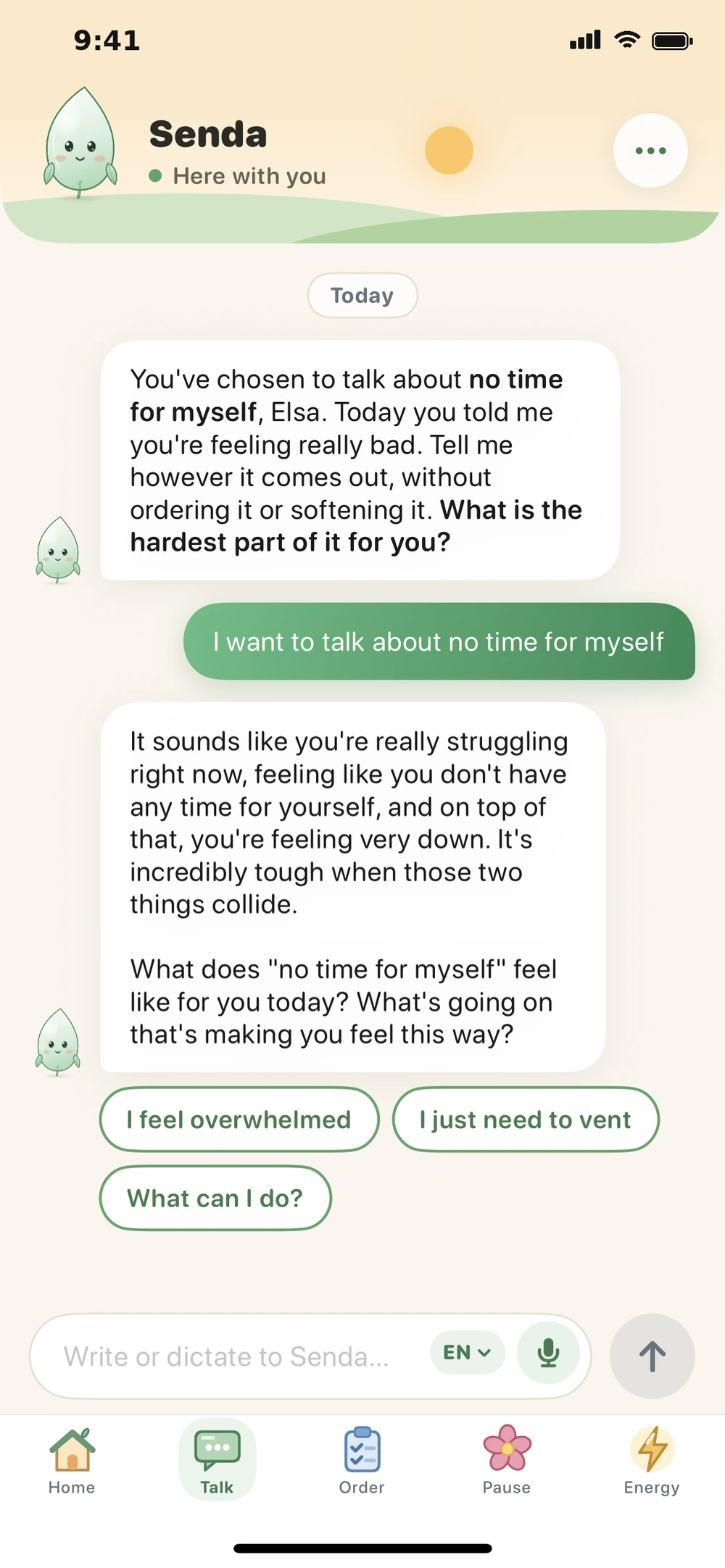
In Talk, you can say how you really are, any time, without judgment. Senda listens first and replies with your day in mind: your energy, your cycle and what is on your plate.
- Empty your head in Order: dictate everything and get a plan with dates and reminders.
- See your energy for today, so you can plan around it.
- Take a real break, from 5 minutes to 4 hours.
Free plan, no card needed. 3-day free trial.
Frequently asked questions
What are the signs of emotional exhaustion?
Feeling drained even after rest, irritability, numbness or loss of interest, trouble concentrating, withdrawing from people and physical signs such as headaches and poor sleep.
Is emotional exhaustion the same as burnout?
It is the core part of burnout. Burnout also includes feeling cynical or detached and less effective. Emotional exhaustion can also come from caring for others at home, not only from work.
How long does it take to recover from emotional exhaustion?
It varies. Many people start to feel better within weeks when demands go down and support goes up, but deeper exhaustion can take months. A professional can help if it lasts.
Can venting help with emotional exhaustion?
Talking about how you feel with someone who listens, or writing it down, can ease the weight. It works best alongside reducing the load and getting rest.
Sources
Keep reading



Senda is a self-care and organization companion, not a medical service. This guide is informational and does not replace advice from a qualified professional.