

In short
- Stress is your body's response to pressure or threat. Short bursts are normal; constant stress wears you down.
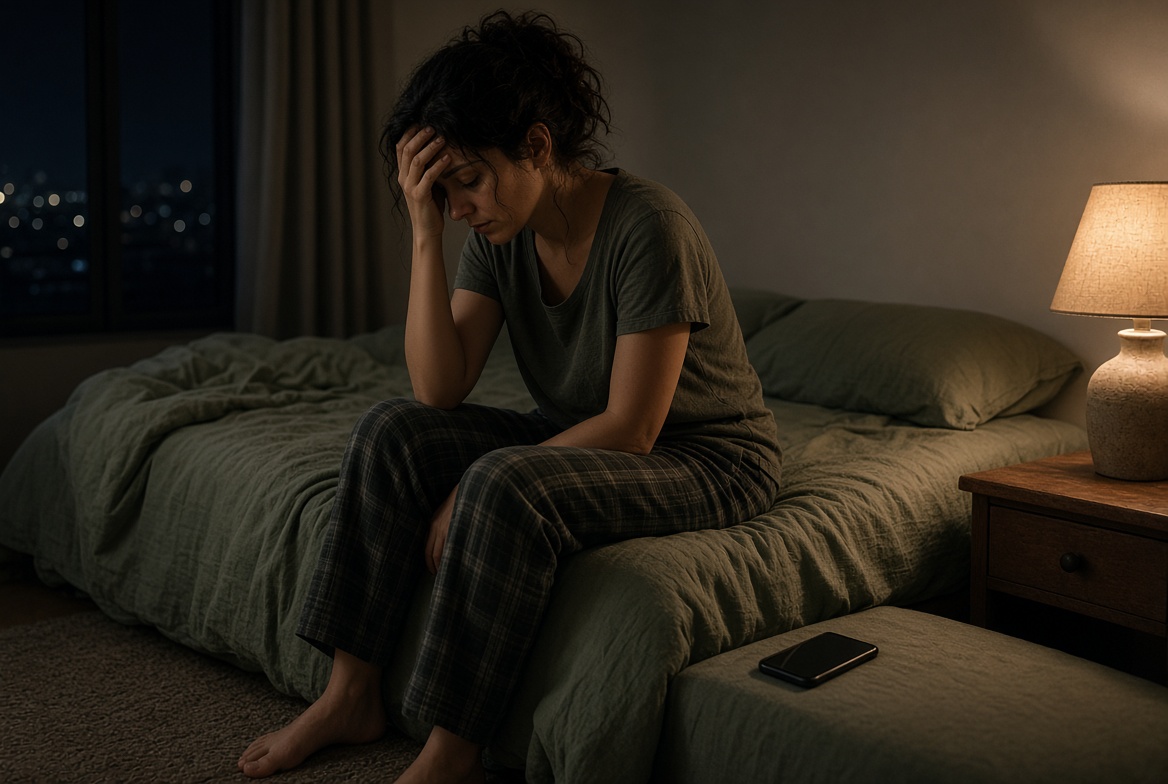
- In women it often shows up as tiredness, poor sleep, irritability and a head that never switches off, rather than "feeling stressed".
- Naming the signs early, lightening the load and talking about it helps more than waiting for things to calm down.
What stress is
The World Health Organization describes stress as a state of worry or mental tension caused by a difficult situation. It is a natural response: it helps you react and focus. The problem is when it never switches off, because there is always something else to carry.
For many women stress doesn't look dramatic. It looks like a normal week with too many tabs open: work, home, children, parents, appointments, and very little time that belongs to you.
Physical signs
- Tiredness that sleep doesn't fix.
- Trouble falling or staying asleep, or waking up already planning.
- Headaches, tense shoulders or jaw.
- Stomach changes: less appetite, more cravings, an upset stomach.
- Catching every cold going around.
Emotional signs
- Irritability: small things make you snap, then you feel guilty.
- Feeling overwhelmed by decisions that used to be easy.
- Worry that loops, especially at night.
- Feeling flat, as if nothing is fun anymore.
Everyday signs
- Forgetting things you would normally remember.
- Doing everything fast and still feeling behind.
- Cancelling the things that recharge you (a walk, a friend, a hobby) because "there's no time".
Why it's easy to miss
When stress builds slowly, it starts to feel like your personality: "I'm just a bit tense", "I've always been a worrier". And because the load is often invisible, nobody around you notices either. Mind, the mental health charity, points out that stress can affect how you feel, think and behave, and the physical signs are often the first you notice.
What helps
- Name it. Writing down "I'm stressed because…" turns a fog into a list.
- Empty your head. Put every task somewhere outside your mind, then pick the one that matters today.
- Lower the bar for one week. Simpler dinners, fewer plans, "good enough" instead of perfect.
- Move a little. A 10-minute walk is enough to change how the afternoon feels.
- Protect sleep. Same time to bed, screens away, and a short wind-down.
- Talk about it. Say out loud what you're carrying, to a person or somewhere private.
Stress, tiredness or something else? A quick comparison
| Everyday tiredness | Stress | When to check with a doctor | |
|---|---|---|---|
| Rest | Improves after a good night | Mind keeps going even when you rest | Exhaustion that doesn't improve for weeks |
| Mood | Normal, a bit flat | Irritable, tense, on edge | Low mood or loss of interest for more than two weeks |
| Body | Heavy eyes, yawning | Headaches, tight shoulders, stomach changes | Chest pain, weight loss, palpitations or new symptoms |
| Thoughts | "I need a nap" | Loops of planning and worry | Feeling hopeless or unable to cope |
The table is a guide, not a diagnosis. If you are unsure, it is always fine to ask your doctor.
A 2-minute daily stress check
Once a day, ask yourself four questions and score each from 0 (not at all) to 3 (a lot):
- How tense does my body feel?
- How hard is it to switch off my thoughts?
- How irritable have I been today?
- How much did I enjoy something today? (score it in reverse: 3 if not at all)
A total that stays above 8 for most of a week is a sign that the load is too high and something needs to change, not that you need to try harder.
Common mistakes
- Waiting for a calmer week. Stress rarely ends on its own when the load stays the same.
- Cutting the things that recharge you first. Walks, friends and hobbies are often the first to go and the ones you need most.
- Using your evenings to catch up. Working or planning late steals the sleep that helps you cope.
- Dealing with it alone. Saying what you carry out loud is one of the simplest ways to lighten it.
An example
Imagine Laura, 38, two children, a full-time job. For weeks she slept badly, snapped at her children and forgot small things. She thought she was "just tired". When she wrote everything down, she counted 46 things she was keeping track of. She handed school admin to her partner, simplified dinners for a month and blocked two lunch breaks a week for a walk. Three weeks later she was sleeping better. Nothing magic: less load, more rest. (Laura is an illustrative example based on common situations, not a real user.)
When to get help
If stress lasts for weeks, affects your sleep or appetite, or you feel you can't cope, talk to your doctor or a mental health professional. If you ever feel in danger, call your local emergency number.
 How Senda helps
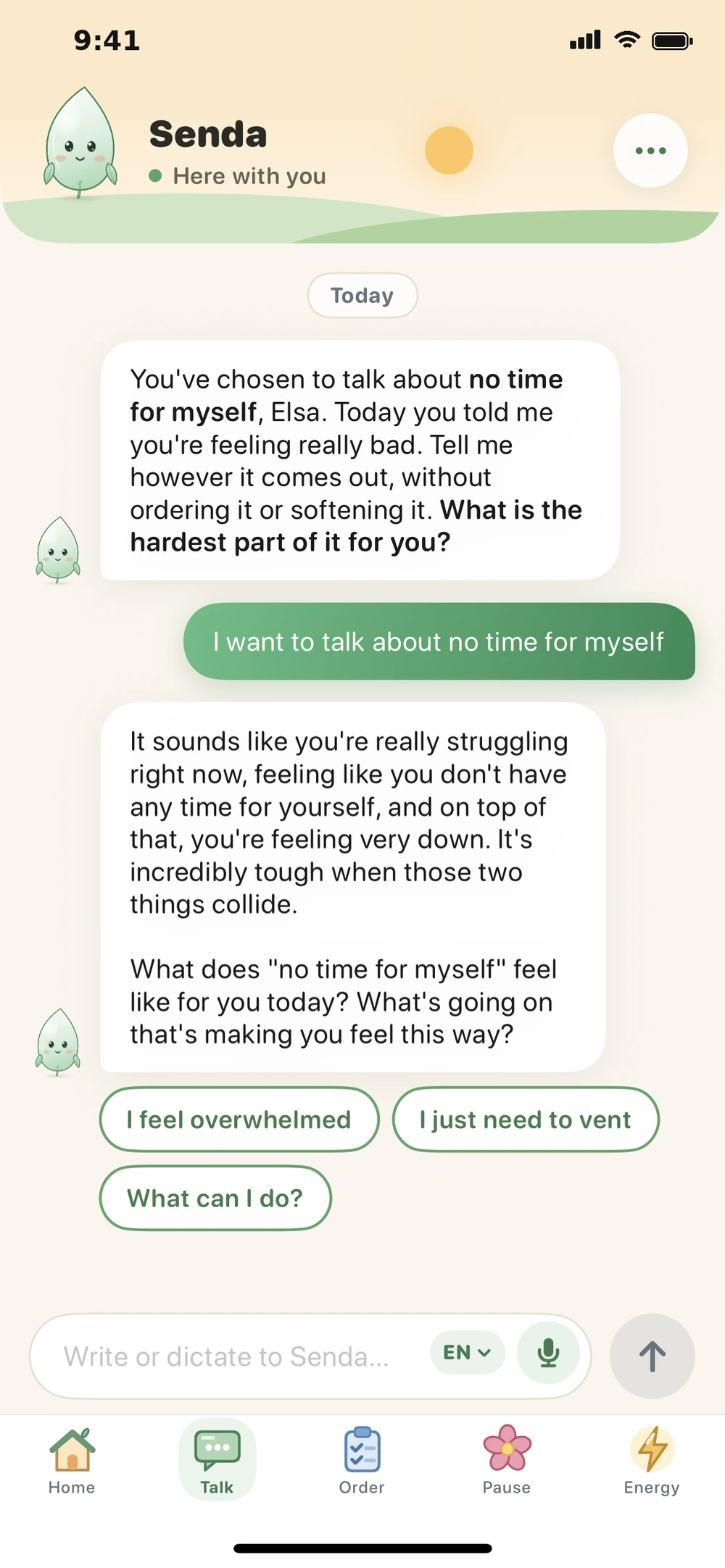
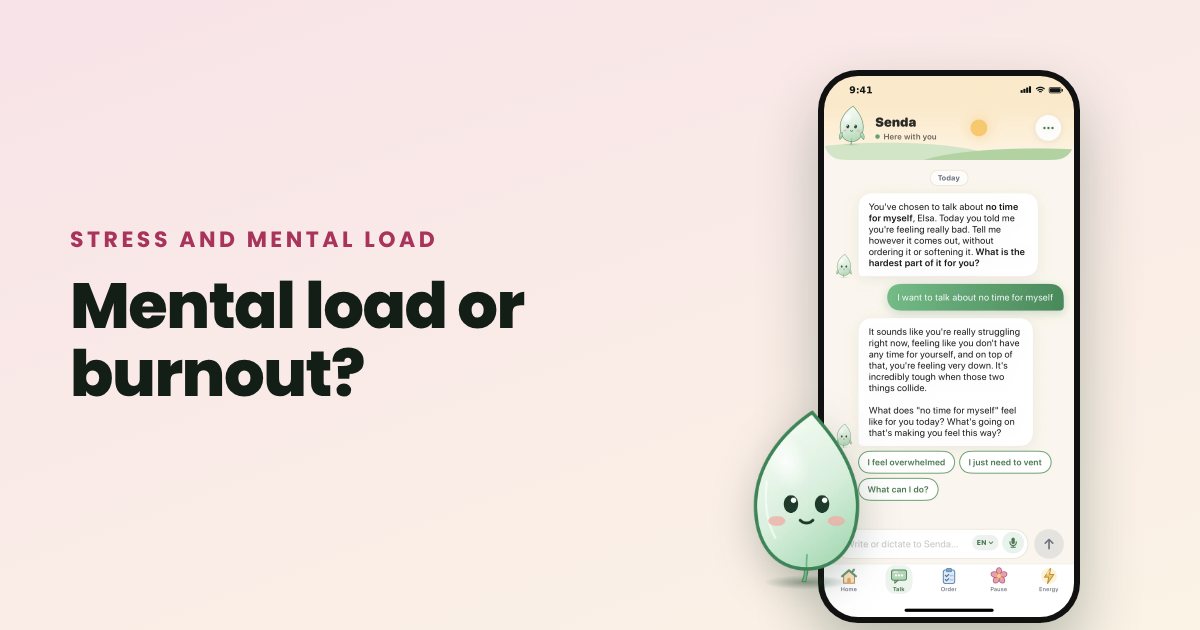
In Talk, you can say how you really are, any time, without judgment. Senda listens first and replies with your day in mind: your energy, your cycle and what is on your plate.
- Empty your head in Order: dictate everything and get a plan with dates and reminders.
- See your energy for today, so you can plan around it.
- Take a real break, from 5 minutes to 4 hours.
Free plan, no card needed. 3-day free trial.
Frequently asked questions
What are the first signs of stress in women?
Often tiredness that sleep doesn't fix, poor sleep, irritability, headaches or tense shoulders, and a head that keeps planning even when you rest.
Can stress cause physical symptoms?
Yes. Stress can show up as headaches, muscle tension, stomach problems, changes in appetite and trouble sleeping. If symptoms persist, see a doctor to rule out other causes.
How do I know if I am stressed or just tired?
Tiredness usually improves with rest. Stress tends to stay: you rest but your mind keeps going, small things irritate you and you feel behind no matter how much you do.
Can stress make you feel tired all the time?
Yes. Ongoing stress can affect your sleep and leave you feeling drained even after rest. If tiredness lasts for weeks, see your doctor to rule out other causes such as low iron or thyroid problems.
How long does stress last?
Short-term stress usually eases when the pressure ends. If it lasts for weeks, affects your sleep, appetite or mood, or you feel unable to cope, talk to a doctor or a mental health professional.
Sources
Keep reading

Senda is a self-care and organization companion, not a medical service. This guide is informational and does not replace advice from a qualified professional.