
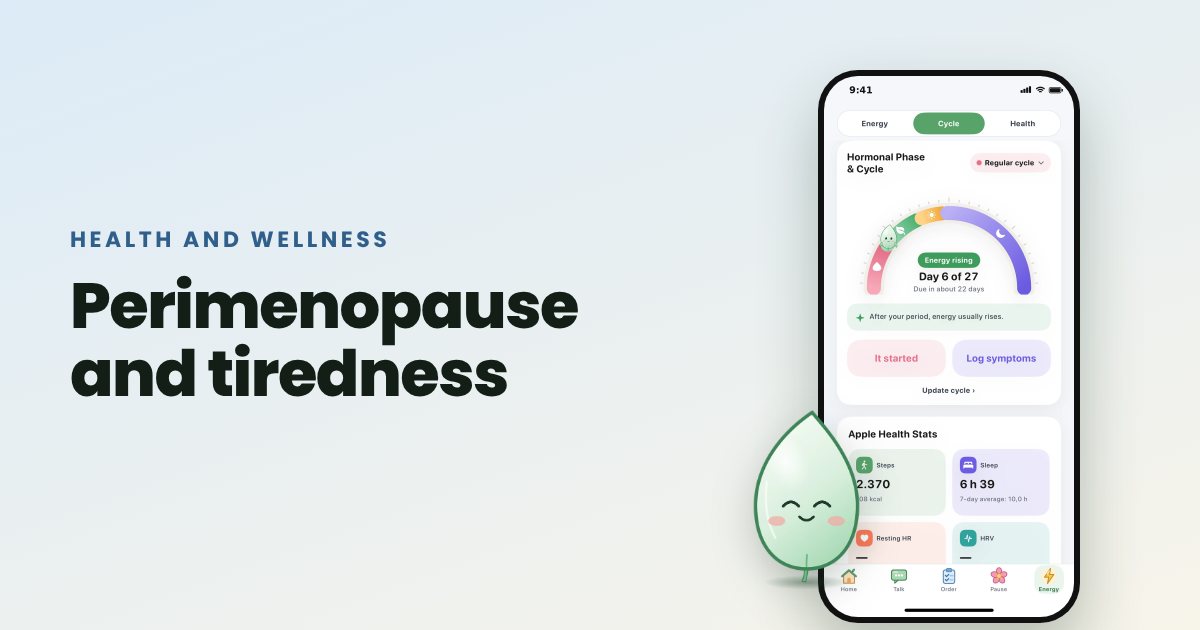
In short
- Perimenopause is the time before menopause when hormones fluctuate and periods change; it often starts in your 40s.
- Tiredness, poor sleep, mood changes and irregular periods are common.
- Tracking your days and talking to a doctor helps; you don't have to just put up with it.
What is perimenopause?
Perimenopause is the transition before menopause, when hormone levels, especially oestrogen, start to fluctuate. Menopause itself is when periods have stopped for 12 months. In the UK the average age of menopause is around 51, and perimenopause often starts some years earlier, usually in the 40s.
The NHS lists problems sleeping, low mood and difficulty concentrating among the common symptoms of perimenopause and menopause.
Common signs
- Periods that become irregular, heavier or lighter.
- Trouble sleeping or waking up at night, sometimes with night sweats.
- Tiredness and lower energy.
- Mood changes, anxiety or irritability.
- Hot flushes.
- Difficulty concentrating, sometimes described as "brain fog".
Not everyone has all of them, and they can come and go.
Why you may feel so tired
Poor sleep is one big reason: night sweats or waking up early add up. Fluctuating hormones can also affect mood and energy directly. Add a busy life, often with children and ageing parents at the same time, and the load can feel heavy.
Gentle ways to plan your days
- Track how you feel alongside your periods, sleep and symptoms. Patterns help you and your doctor.
- Plan demanding tasks for the times of day you usually feel better.
- Protect your sleep window and keep evenings calmer when you can.
- Move a little every day: walking counts.
- Talk about it with people close to you; many women go through this quietly.
You may also like: Tired before your period? PMS fatigue, why it happens and what helps
Talk to your doctor
Perimenopause symptoms can be treated. A GP can talk you through options, including hormone therapy and other treatments, and check for other causes of tiredness, like thyroid problems or low iron.
 How Senda helps
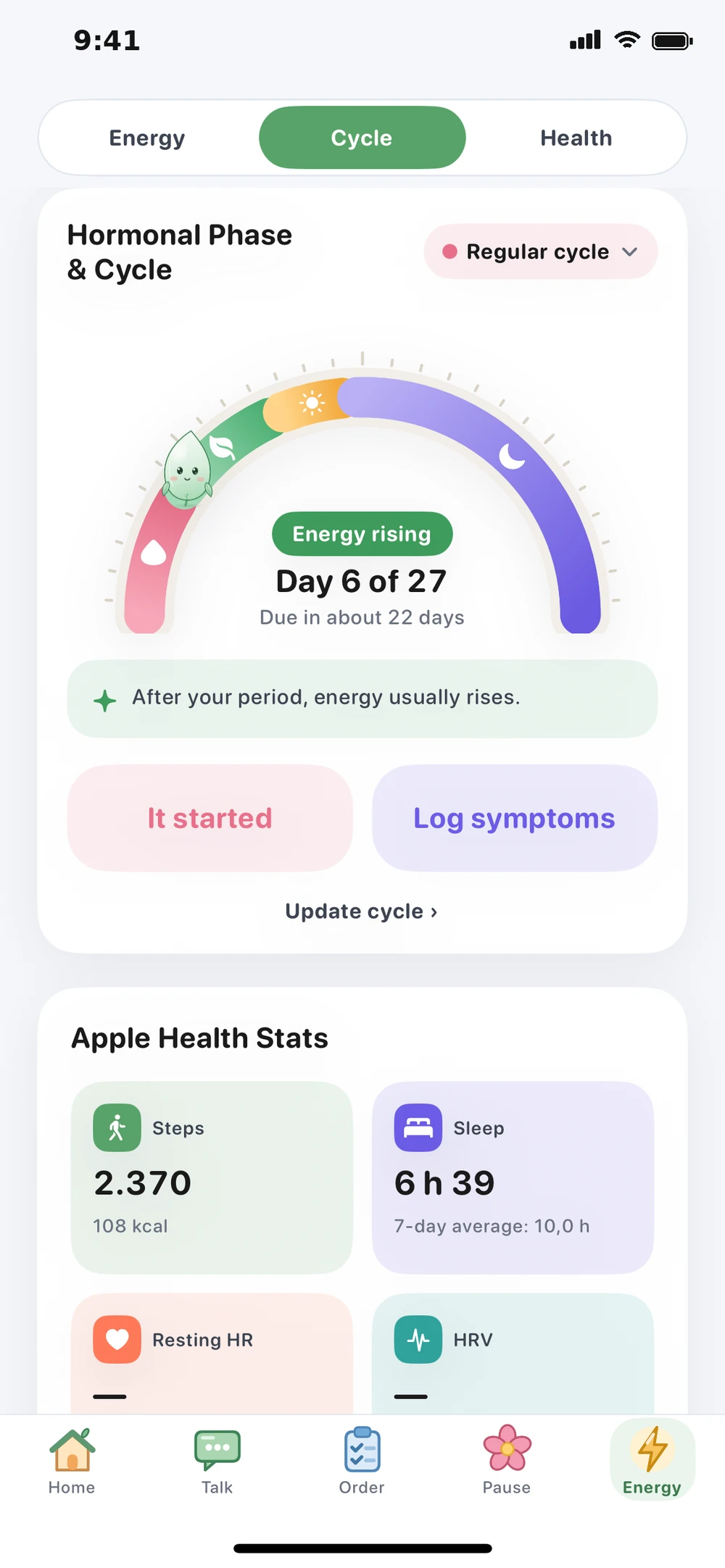
Senda follows you through perimenopause and menopause, not only regular cycles.
- Choose Perimenopause or Menopause as your stage, and log symptoms when you notice them.
- See your energy with your sleep and your day, and learn which days usually feel lighter.
- Talk about how you feel in Talk, any time, without judgment.
Free plan, no card needed. 3-day free trial.
Frequently asked questions
Is tiredness a symptom of perimenopause?
Yes. Tiredness is common in perimenopause, often linked to poor sleep, night sweats and fluctuating hormones. A doctor can help and check for other causes.
At what age does perimenopause start?
It often starts in the 40s, a few years before menopause, but timing varies from woman to woman.
What helps perimenopause fatigue?
Protecting sleep, moving a little each day, planning demanding tasks for better times of day and talking to a doctor about treatment options.
Sources
Keep reading

Senda is a self-care and organization companion, not a medical service. This guide is informational and does not replace advice from a qualified professional.