
In short
- Women report more sleep problems than men, and hormones across the cycle, pregnancy and menopause play a role.
- Most of what helps is simple and steady: regular times, a wind-down, a dark cool room and less late caffeine.
- If poor sleep lasts weeks or you snore loudly or stop breathing at night, see a doctor.
Why sleep is different for many women
If you lie awake thinking about tomorrow's list, you are not alone. Women are more likely than men to report insomnia, and a 2016 review by Mong and Cusmano in Philosophical Transactions of the Royal Society B describes how sex hormones such as oestrogen and progesterone are linked with changes in sleep across the menstrual cycle, during pregnancy and around menopause.
Life matters too. Night feeds, children who wake, caring for parents and the mental load that keeps your brain planning at 11 pm all cut into sleep. Many women go to bed last because it is the only quiet moment of the day, then pay for it the next morning.
How sleep can change across life
| Stage | What many women notice |
|---|---|
| Before a period | Lighter sleep, more waking, vivid dreams for some |
| Pregnancy | Discomfort, needing the toilet, heartburn, restless legs |
| Early parenthood | Broken nights and difficulty falling back asleep |
| Perimenopause and menopause | Hot flushes and night sweats, waking early |
| Busy, stressful periods | Racing thoughts and trouble falling asleep |
Tips that actually help
- Keep regular times. Going to bed and waking up at similar times, even at weekends, is one of the NHS's main recommendations.
- Wind down for 30 minutes. Dim lights, a warm shower, reading, gentle stretching. The same steps each night tell your body it is time.
- Empty your head before bed. Write tomorrow's tasks and worries on paper, so your brain does not have to hold them.
- Make the room dark, quiet and cool. Blackout curtains or an eye mask, earplugs if needed, a lighter duvet in warm months.
- Cut late caffeine and alcohol. Caffeine can stay in your body for hours; alcohol may help you fall asleep but makes sleep lighter later.
- Move during the day. Regular activity helps sleep, ideally not right before bed.
- Keep the phone out of reach. Charge it outside the bedroom if you can.
- If you cannot sleep, get up. After about 20 minutes awake, go to another room and do something calm until you feel sleepy.
Around your cycle and menopause
On nights before your period, you may need a slightly longer wind-down and a cooler room. Around menopause, layers you can remove, a fan and breathable bedding can help with night sweats. If hot flushes or low mood are disturbing your sleep a lot, talk to your doctor: there are treatments that can help.
A worked example
*This is an illustrative example, not a real user.* Rocío, 41, falls asleep fine but wakes at 3 am with her mind racing about work and the children's schedules. She starts writing tomorrow's list at 9:30 pm, moves her phone to the kitchen and stops coffee after lunch. On nights she still wakes up, she reads in the living room for 15 minutes instead of lying in bed worrying. After three weeks she is waking less, and falling back to sleep faster when she does.
Common mistakes
- "Revenge bedtime": staying up late because it is your only time to yourself. Try protecting a shorter break earlier in the evening instead.
- Catching up on sleep only at weekends, which can make Monday nights harder.
- Checking the clock again and again during the night.
- Solving tomorrow's problems in bed. Write them down earlier instead.
You may also like: Tired before your period? PMS fatigue, why it happens and what helps
When to see a doctor
See your doctor if poor sleep lasts more than a few weeks, if you feel very sleepy during the day, if you snore loudly or someone notices you stop breathing at night, if you have very uncomfortable legs in the evening, or if sleep problems come with low mood or anxiety. These can be signs of conditions that can be treated.
 How Senda helps
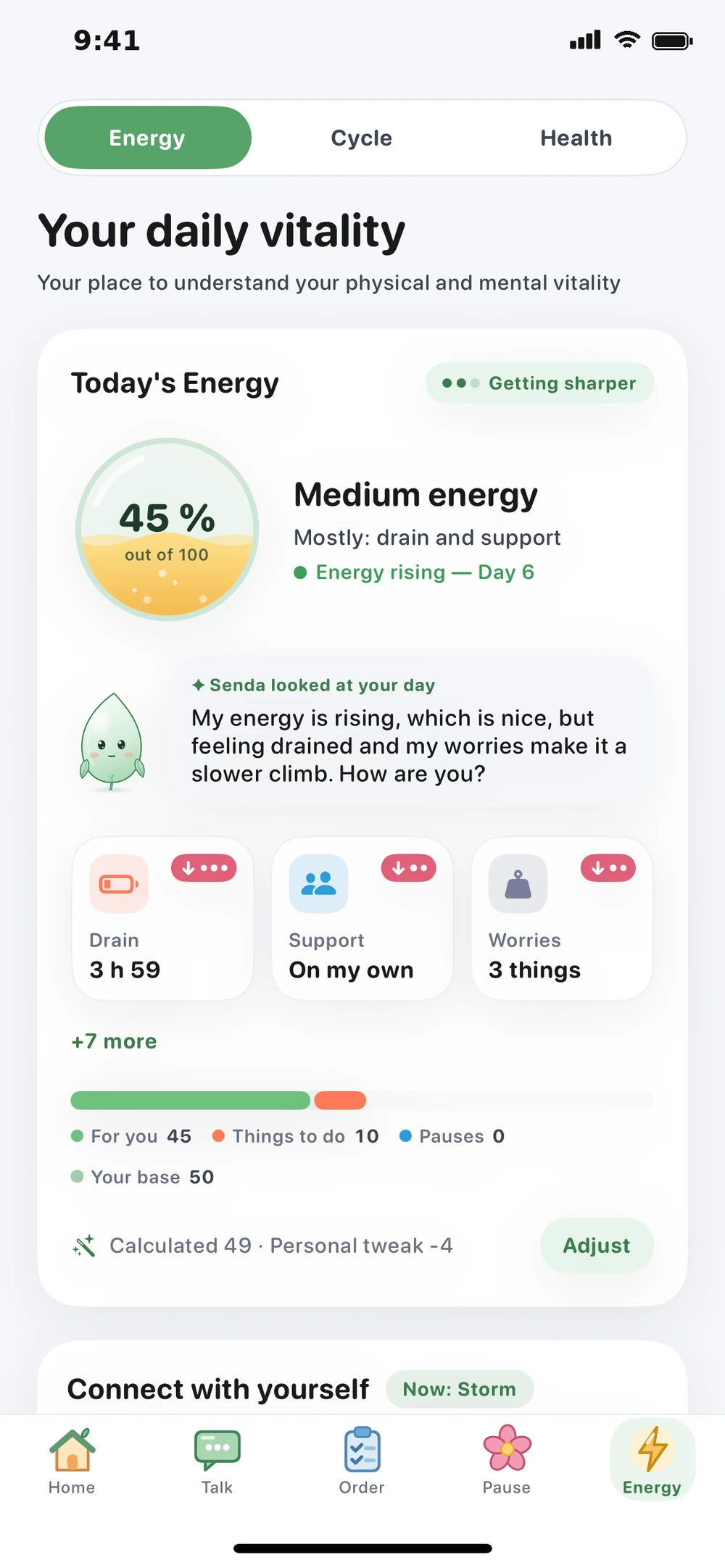
Senda shows your energy for the day from your sleep, your plans and your cycle, in plain words, and learns from you. Connect Apple Health if you want sleep and steps to count.
- Plan lighter on low days, with Order.
- Take a real break when your level drops.
- Vent in Talk when you don't know why you feel off.
Free plan, no card needed. 3-day free trial.
Frequently asked questions
Why do women have more trouble sleeping?
Hormonal changes across the menstrual cycle, pregnancy and menopause are linked with changes in sleep, and life factors such as caring for children and carrying the mental load also play a part.
Does the menstrual cycle affect sleep?
For many women, yes. Some notice lighter sleep, more waking or vivid dreams in the days before their period. Keeping a regular routine and a cool room can help.
How can I fall asleep faster when my mind is racing?
Write down tomorrow's tasks and worries before bed, keep a calm wind-down routine, keep the phone out of the bedroom and, if you are awake for about 20 minutes, get up and do something calm until you feel sleepy.
When should I see a doctor about sleep?
If poor sleep lasts more than a few weeks, you are very sleepy during the day, you snore loudly or stop breathing at night, or sleep problems come with low mood or anxiety.
Sources
Keep reading



Senda is a self-care and organization companion, not a medical service. This guide is informational and does not replace advice from a qualified professional.