
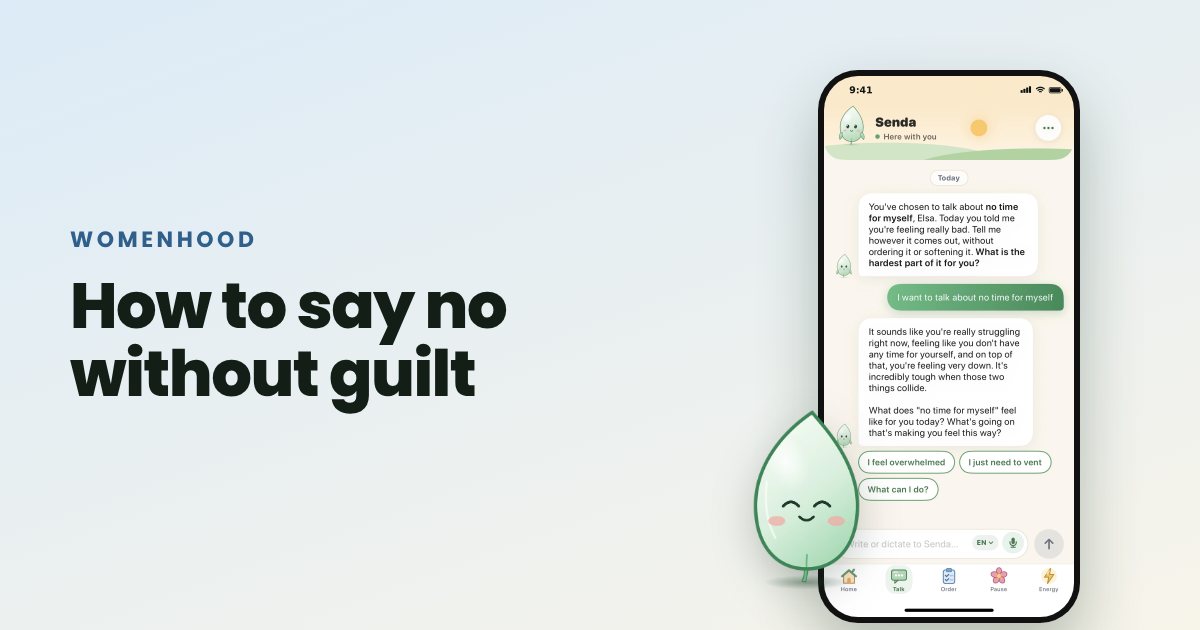
In short
- Every yes uses time and energy. Saying no to some things is saying yes to others, including yourself.
- A good no is short, kind and clear. You don't owe a long explanation.
- Practice with small requests first; it gets easier.
Why saying no feels so hard
Many women learned early that being helpful makes them liked. Saying no can feel selfish or risky, as if it might disappoint someone. But a yes you don't have room for usually ends in tiredness, resentment or a rushed job.
The NHS includes learning to say no among its tips for raising low self-esteem: being assertive is a skill you can practise.
The shape of a kind no
- Thank them if it fits: "Thanks for thinking of me".
- Say no clearly: "I can't this time".
- Offer an alternative only if you want to: "I could help next month".
Short is kinder than vague. "Maybe" often leads to more pressure later.
Phrases you can use
At work
- "I'd like to do this well, and with my current projects I can't. Which one should I pause?"
- "I can't take this on this week. I can look at it on Monday."
With family
- "This weekend we're staying home. Let's plan a visit for next month."
- "I can't host this year, but I'd love to bring dessert."
With friends
- "I'm saving my energy tonight. Can we do coffee next week?"
- "I can't make it, but thank you for inviting me."
With yourself
- "Not today" to the extra task that can wait.
When you feel guilty anyway
Guilt after a no doesn't mean you did something wrong. It means you're changing a habit. Notice it, remind yourself why you said no and let it pass.
A quick filter before you say yes
Before answering, ask yourself three questions:
- [ ] Do I have the time without losing sleep, rest or time with my family?
- [ ] Do I want to, or am I saying yes out of guilt or fear?
- [ ] What will I drop if I say yes?
If you cannot tick the first two, the kind answer for everyone may be no, or "not now". A useful default is to never answer on the spot: "Let me check and get back to you tomorrow" gives you time to decide.
A worked example
*This is an illustrative example, not a real user.* Mónica is asked to organise the class end-of-year party for the third year in a row. She notices she wants to say yes only so nobody is disappointed. She replies the next day: "I've done it the last two years, so I'll pass this time. I'm happy to help on the day with drinks." Another parent takes it on.
Common mistakes
- Over-explaining. A long list of reasons invites negotiation. One short reason is enough.
- Saying "maybe" when you mean no. It keeps the task in your head for weeks.
- Saying yes to avoid conflict, then resenting it later.
- Never practising on small things. Start with low-stakes nos to build the habit.
Phrases for common situations
- At work: "I'm at capacity this week. If this is a priority, what should I move?"
- At school: "I can't take that on this term, but I'm happy to help on the day."
- With family: "We're keeping that weekend quiet. Let's find another date."
- With friends: "I'd love to, but I need a night in. Can we do next week?"
Start small
Practice with low-stakes requests: a meeting you don't need to attend, an extra favor, a late-night message. Each small no makes the next one easier.
 How Senda helps
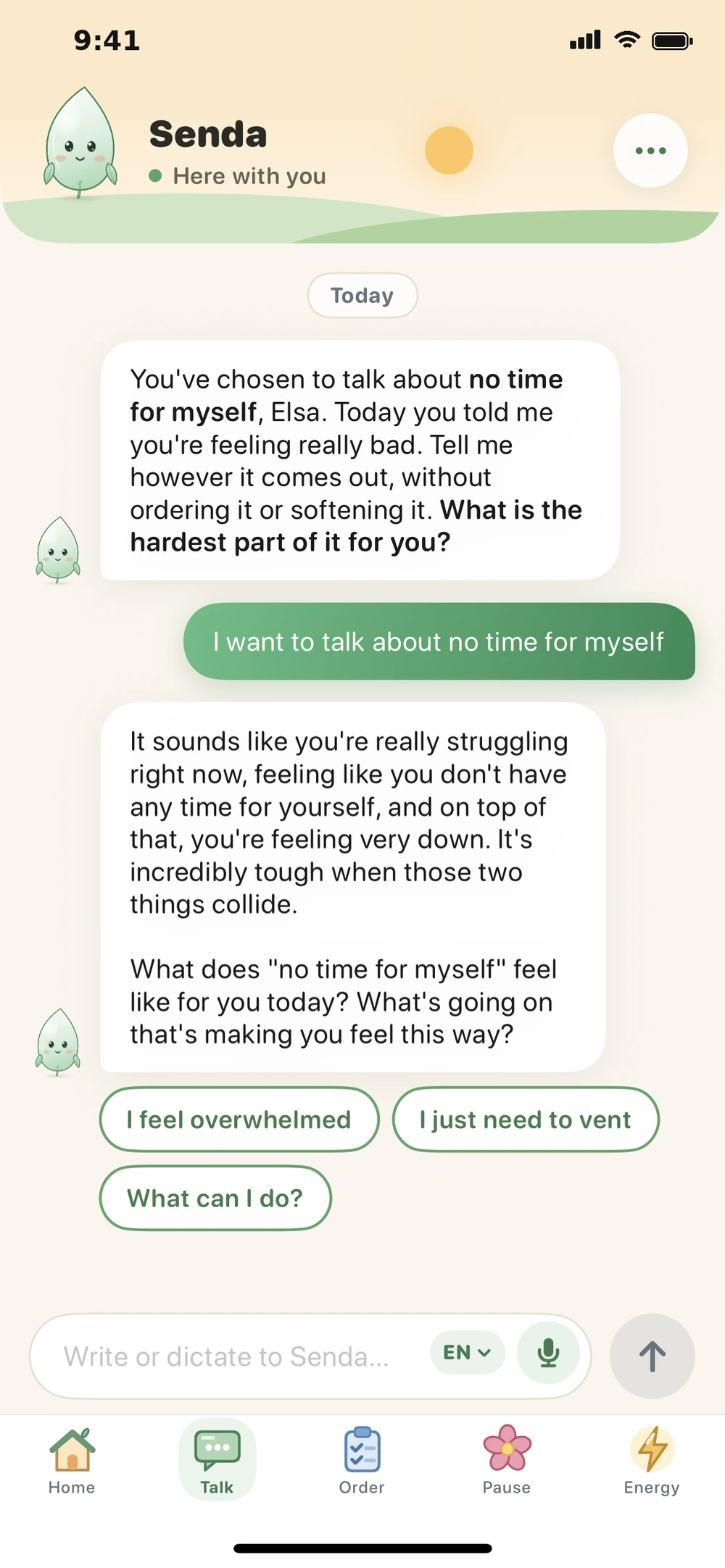
Senda helps you see what you already have on your plate, so it's easier to know when to say no.
- Your energy for today on the home screen shows how much room you really have.
- Order keeps all your commitments in one place.
- Not sure how to say it? Rehearse it in Talk: "help me say no to my boss kindly".
Free plan, no card needed. 3-day free trial.
Frequently asked questions
How do I say no without feeling guilty?
Keep it short, kind and clear, offer an alternative only if you want to, and remember that guilt after a no usually means you are changing a habit, not doing something wrong.
What is a polite way to say no?
"Thank you for thinking of me, I can't this time" is polite and clear. You don't need a long explanation.
Why is it so hard for women to say no?
Many women are raised to be helpful and accommodating, so saying no can feel selfish. Seeing a no as protecting your time and energy makes it easier.
How do I say no at work without seeming difficult?
Be friendly and brief, give one reason and offer an alternative if you want, such as "I can't take this on this week, but I can review it on Friday."
Is it rude to say no without a reason?
No. A polite "No, thank you, I can't this time" is a complete answer. You can give a reason if you want, but you do not owe a detailed explanation.
Sources
Keep reading




Senda is a self-care and organization companion, not a medical service. This guide is informational and does not replace advice from a qualified professional.