
In short
- People pleasing is putting other people's needs and approval ahead of your own, again and again.
- It is often learned early and rewarded later: "she's so helpful". The cost is exhaustion and quiet resentment.
- You don't stop overnight. You start with small pauses: "let me check and get back to you".
What people pleasing looks like
- Saying yes before you've checked if you can.
- Apologising for things that aren't your fault.
- Feeling responsible for everyone's mood.
- Struggling to ask for what you need.
- Feeling guilty when you rest.
None of this makes you weak. Often it means you learned that being easy, helpful and agreeable kept you safe or loved.
Why so many women do it
Many girls grow up being praised for being kind, helpful and not causing trouble. Later, those same expectations show up at work and at home: remembering birthdays, smoothing conflicts, taking the extra task. The help is real, but it adds up, and when nobody else notices it, it turns into the invisible load.
What it costs
Pleasing everyone means you are always last on the list. Over time that leads to tiredness, resentment you don't feel allowed to express and a sense that you've lost track of what you want. The NHS notes that low self-esteem can make it hard to stand up for yourself, and that being more assertive is one of the ways to build it back up.
How to start stopping
- Add a pause. Replace the automatic yes with "Let me check and get back to you." It buys time to decide.
- Notice the body. A tight chest when you say yes is information.
- Start with low stakes. Practise saying no to small things: an extra meeting, a favour you don't have time for.
- Say no without a long explanation. "I can't this week" is a complete sentence.
- Offer an alternative only if you want to. "I can't do Friday, but I could help next week."
- Expect some discomfort. Guilt doesn't mean you did something wrong. It means you did something new.
- Make a list of what you want. Pleasers often don't know. Start with one thing for this week.
When it's more than a habit
If people pleasing comes with constant anxiety, fear of conflict that affects your life, or you are in a relationship where saying no feels unsafe, talk to a professional. If you feel in danger, call your local emergency number.
 How Senda helps
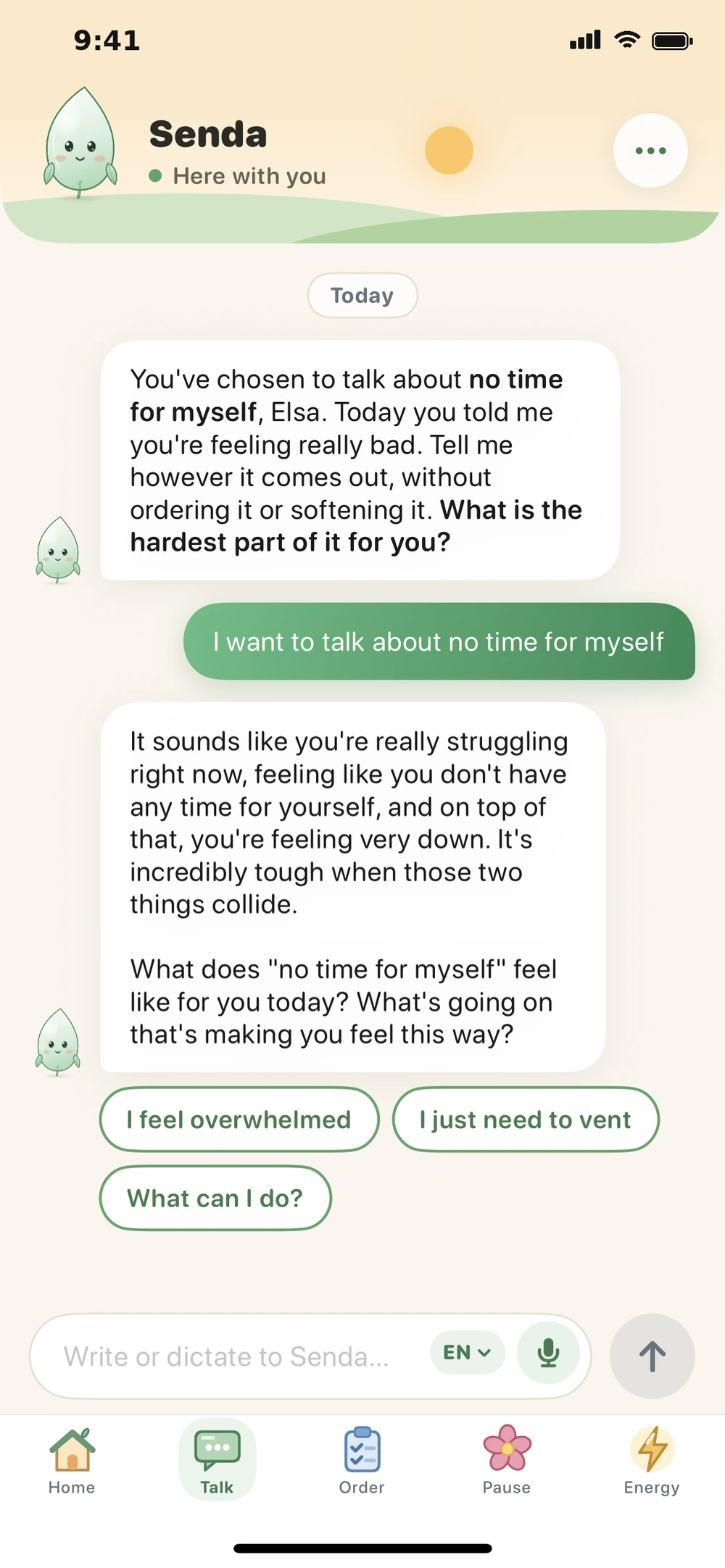
In Talk, you can say how you really are, any time, without judgment. Senda listens first and replies with your day in mind: your energy, your cycle and what is on your plate.
- Empty your head in Order: dictate everything and get a plan with dates and reminders.
- See your energy for today, so you can plan around it.
- Take a real break, from 5 minutes to 4 hours.
Free plan, no card needed. 3-day free trial.
Frequently asked questions
What is people pleasing?
It is a pattern of putting other people's needs and approval before your own, often at the cost of your time, energy and wellbeing.
Why am I a people pleaser?
Often because it was rewarded or felt safe earlier in life. Many women are praised for being helpful and agreeable, and the habit continues into work and family life.
How do I stop being a people pleaser?
Start small: pause before saying yes, practise saying no to low-stakes requests, skip long explanations and expect some guilt at first.
Sources
Keep reading


Senda is a self-care and organization companion, not a medical service. This guide is informational and does not replace advice from a qualified professional.