

In short
- A boundary at work is a clear limit on your time, availability or workload, said out loud.
- Without them, work spreads into evenings and weekends. The WHO links burnout to chronic workplace stress that hasn't been managed.
- Good boundaries are specific and kind: "I can do this by Friday, not today."
Why boundaries at work matter
When there are no limits, work fills every gap: the email at 9 p.m., the extra project, the meeting over lunch. For women who also carry most of the load at home, that leaves almost nothing for rest. The World Health Organization describes burnout as resulting from chronic workplace stress that has not been successfully managed. Boundaries are one of the ways to manage it.
Decide your limits first
Before you say anything, get clear on what you need:
- Time: when does your working day end? When are you not reachable?
- Workload: how many big projects can you carry at once?
- Communication: which channels are for urgent things, and which can wait?
- Personal: what isn't up for discussion (school pick-up, a medical appointment)?
How to say it
Keep it short, specific and friendly. You don't need to over-explain.
- "I log off at 6. I'll pick this up first thing tomorrow."
- "I can take this on if we move the deadline of X. Which one is the priority?"
- "I'm not available for meetings after 4 on Tuesdays and Thursdays."
- "I can't take this one, but I can help with the first draft."
- "If it's urgent, call me. Otherwise I'll answer emails during working hours."
Handling pushback
- Repeat calmly. You don't need a new reason every time.
- Offer options, not apologies. "I can do A or B this week. Which helps most?"
- Put it in writing when it's about workload, so priorities are clear for everyone.
- Hold it for a few weeks. People adjust to consistent limits.
Protect the boundary yourself
- Turn off notifications outside work hours.
- Block time in your calendar for focused work and for breaks.
- Don't answer late messages "just this once" if you want the limit to stick.
You may also like: Working from home with kids: a realistic plan for focus, breaks and less guilt
When boundaries aren't enough
If the workload is unmanageable no matter what you say, or you feel exhausted, cynical and less effective for weeks, talk to your manager, HR or occupational health, and see your doctor. That may be more than a boundary problem.
 How Senda helps
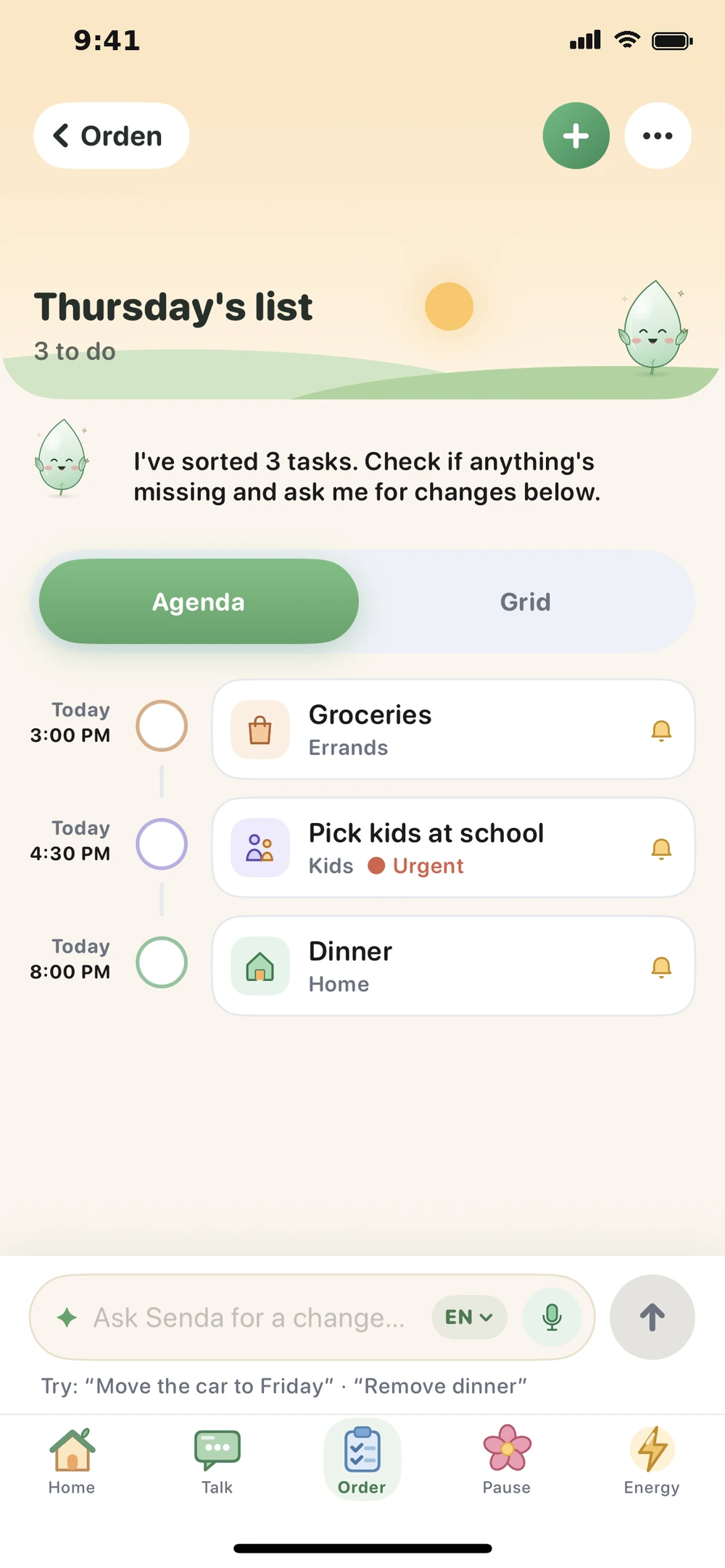
In Order, you dictate everything at once, however it comes out ("dentist Tuesday at 5, gift for Lucía, pay the gym") and Senda turns it into tasks with dates, categories and reminders. Change it just by saying so.
- Plan around your energy: Senda shows your level for the day.
- Vent in Talk when the list feels like too much.
- Protect a real break in your plan.
Free plan, no card needed. 3-day free trial.
Frequently asked questions
How do I set boundaries at work?
Decide your limits on time, workload and availability, then say them clearly and briefly. Offer options instead of apologies and hold the limit consistently.
How do I say no at work politely?
Use short, specific phrases such as "I can do this by Friday, not today" or "I can take this on if we move X. Which is the priority?"
Can setting boundaries at work prevent burnout?
Boundaries help manage workplace stress, which the WHO links to burnout. If your workload stays unmanageable, talk to your manager, HR or a doctor.
Sources
Keep reading



Senda is a self-care and organization companion, not a medical service. This guide is informational and does not replace advice from a qualified professional.