
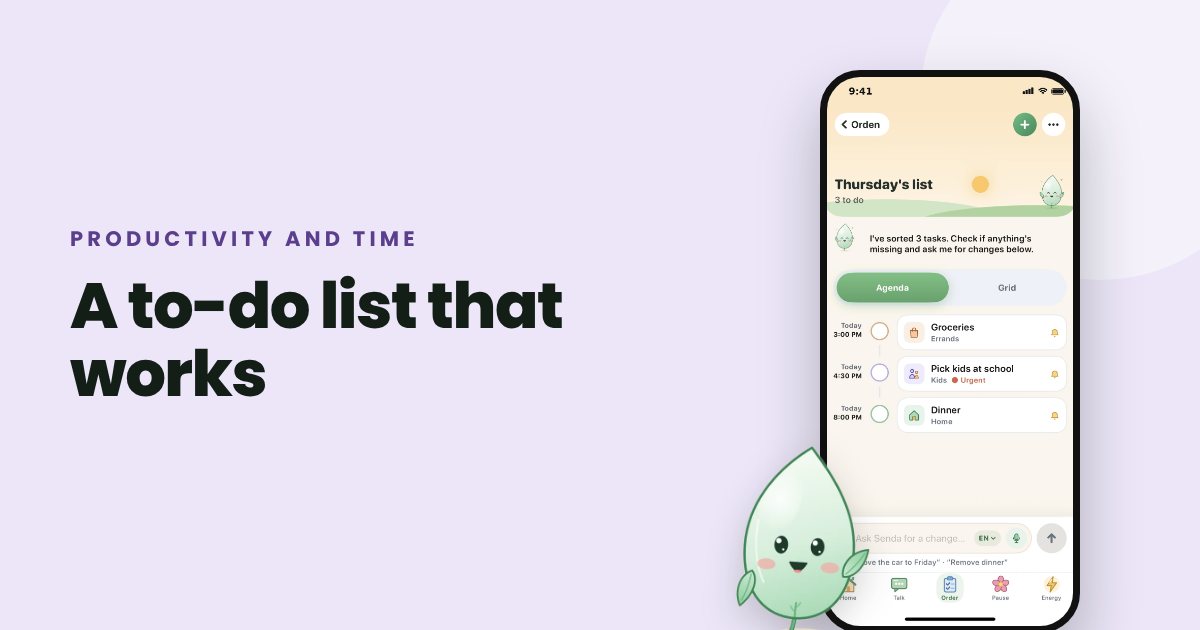
In short
- Most lists fail because they mix everything: big projects, tiny errands and things you might do one day.
- A list that works has two levels: a master list for everything, and a short daily list of what really happens today.
- Give tasks a next step and a date, and accept that some things will move to tomorrow.
Why your list keeps growing
A to-do list is supposed to calm you down. Often it does the opposite: forty items, no order, the same tasks copied from day to day. Every time you look at it, you feel behind.
The problem is not you. It is that the list mixes very different things: "book the dentist" next to "sort out the garage" next to "learn Italian". Your brain cannot tell what to do first, so it does nothing, or does the easiest thing.
The two-level list
- Master list. Everything goes here, as soon as you think of it. Work, home, children, ideas. It is a storage place, not a plan.
- Today list. Three to five things, taken from the master list, that will really happen today. Nothing else.
The master list keeps your head clear. The today list keeps you moving.
Write tasks that you can actually do
- Start with a verb. "Call the school about the trip" instead of "school trip".
- Write the next step, not the whole project. "Choose three photos for the album" instead of "make the photo album".
- Add a date when there is one: deadlines, appointments, birthdays.
- Split anything that takes more than an hour into smaller steps.
Pick your three
Each morning (or the night before), choose up to three priorities for the day. Ask: what will cause problems if it doesn't happen? What has a deadline? What will make tomorrow easier? The rest can wait on the master list without guilt.
Write it down before bed
A 2018 study at Baylor University found that people who spent five minutes writing a to-do list for the next days fell asleep faster than people who wrote about tasks they had already completed. Getting tomorrow out of your head can help it switch off.
Also useful: Decision fatigue: why small choices wear you out (and how to make fewer)
Review once a week
Once a week, go through the master list: delete what no longer matters, move what has a date to your calendar and pick a few things for the coming week. Ten minutes is enough.
 How Senda helps
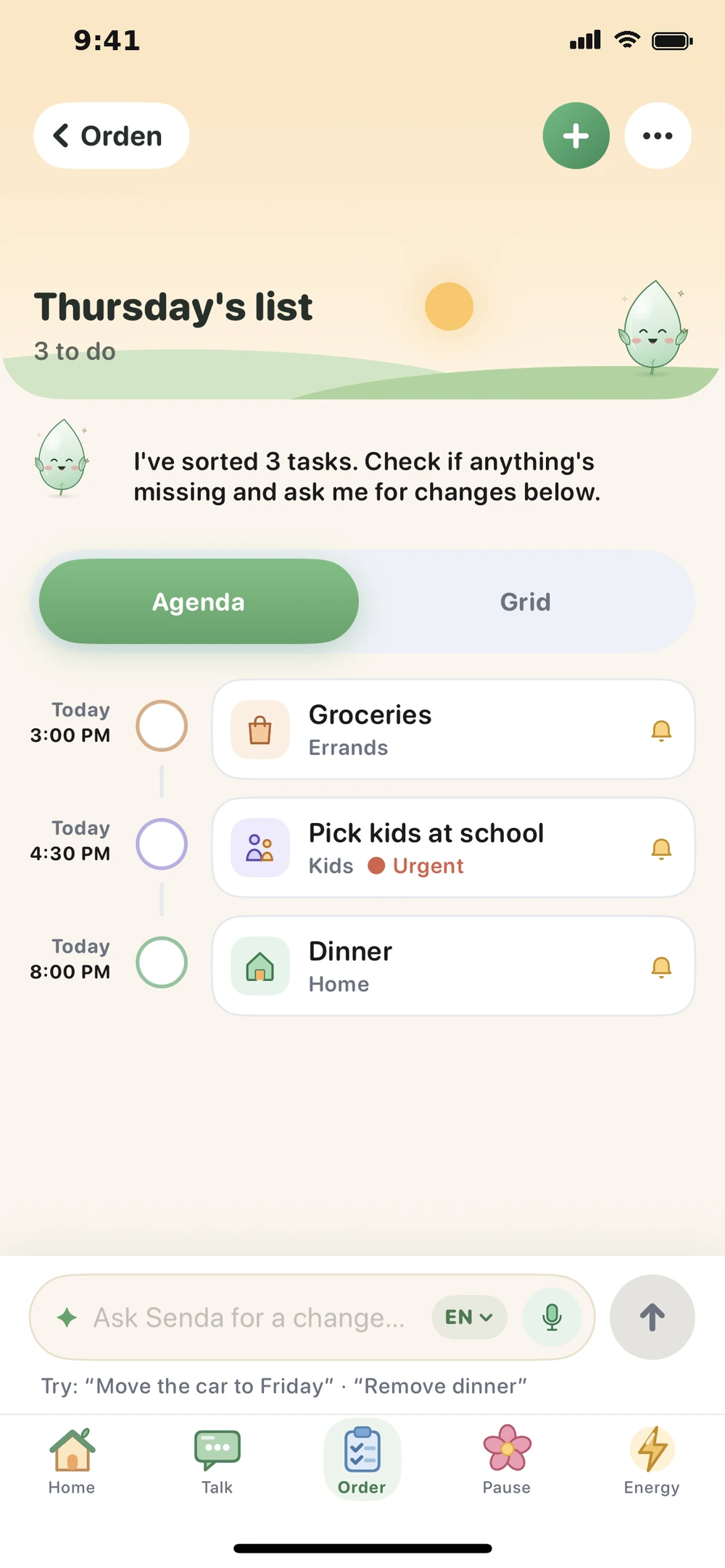
In Order, you dictate everything at once, however it comes out ("dentist Tuesday at 5, gift for Lucía, pay the gym") and Senda turns it into tasks with dates, categories and reminders. Change it just by saying so.
- Plan around your energy: Senda shows your level for the day.
- Vent in Talk when the list feels like too much.
- Protect a real break in your plan.
Free plan, no card needed. 3-day free trial.
Frequently asked questions
How many items should a daily to-do list have?
Keep the daily list short: three to five tasks you will really do today. Everything else stays on a master list until you choose it.
Should I write my to-do list at night or in the morning?
Either works. Writing it the night before can help you switch off; a Baylor University study found that writing a to-do list at bedtime helped people fall asleep faster.
What do I do with tasks I never get to?
Look at them once a week. Delete what no longer matters, break big tasks into a first small step, and give important ones a date.
Sources
Keep reading


Senda is a self-care and organization companion, not a medical service. This guide is informational and does not replace advice from a qualified professional.