

In short
- Many couples feel more distant and argue more after a baby. It is common, not a sign you chose wrong.
- An 8-year study found relationship satisfaction often dips after the first child.
- What helps: sharing the invisible load, short daily check-ins and protecting small moments for the two of you.
Why the relationship changes
A baby brings love, and also less sleep, less time, more tasks and new roles. Many couples are surprised by how much they argue in the first year, often about small things: who got up last night, who forgot the nappies, who gets to shower.
Research backs up what many parents feel. A study by Doss and colleagues, which followed couples for eight years, found that relationship satisfaction tended to drop after the birth of a first child, compared with couples without children. The drop is not universal, and many couples recover and grow closer, but it is common enough that you should not feel alone if it is happening to you.
The invisible load is often the real fight
Arguments about "who did more" are rarely about one task. They are about the thinking work that comes with a baby: knowing when the next feed is, noticing that the nappies are running low, booking the vaccinations, researching nurseries. When one person, often the mother, carries most of this, the other may not even see it. Resentment grows quietly.
What helps: five practical steps
- Make the load visible. For one week, both write down everything you do and think about for the baby and the home. Compare lists calmly.
- Share ownership, not tasks. One person owns nights on weekends, the other owns the nappy and formula supply. Owning means noticing and planning, not waiting to be asked.
- Have a ten-minute daily check-in. When the baby sleeps: how are you, what is tomorrow, what do you need. No phones.
- Protect sleep for both. Take turns for night feeds or early mornings, so each of you gets at least one longer stretch.
- Plan small moments together. A walk with the pram, a takeaway on the sofa, twenty minutes talking about something other than the baby.
A weekly check-in in 15 minutes
| Question | Why it helps |
|---|---|
| What went well this week? | Starts with appreciation, not blame |
| What felt heavy, and for whom? | Makes the invisible load visible |
| What is coming next week? | Avoids last-minute stress |
| Who owns what next week? | Clear ownership, fewer reminders |
| What do we each need? | Sleep, time alone, help from family |
A worked example
*This is an illustrative example, not a real user.* Carla and David have a four-month-old. Carla feels she is the only one who remembers everything; David feels criticised whatever he does. They each write a list for a week. David is surprised by how much planning sits on Carla's list. They agree that David owns the nappy and formula supply and the paediatrician appointments, and that on Saturdays he takes the early morning so Carla sleeps until nine. Their Sunday check-in takes fifteen minutes.
Common mistakes
- Keeping score. "I did three nights" turns partners into rivals. Talk about load and needs instead.
- "Just tell me what to do." Well-meant, but it keeps one person as the manager. Take whole areas.
- Waiting for things to go back to normal. There is a new normal, and it needs new agreements.
- Talking only about logistics. Ask how the other person is, not just what needs doing.
When to get help
If you argue most days, feel constantly resentful or lonely in the relationship, or one of you feels low, anxious or numb for more than two weeks, talk to a professional. Postnatal depression can affect either parent and can be treated. A couples counsellor can also help you find a new way to work as a team. If there is violence or you feel unsafe, contact your local emergency number or a support service.
 How Senda helps
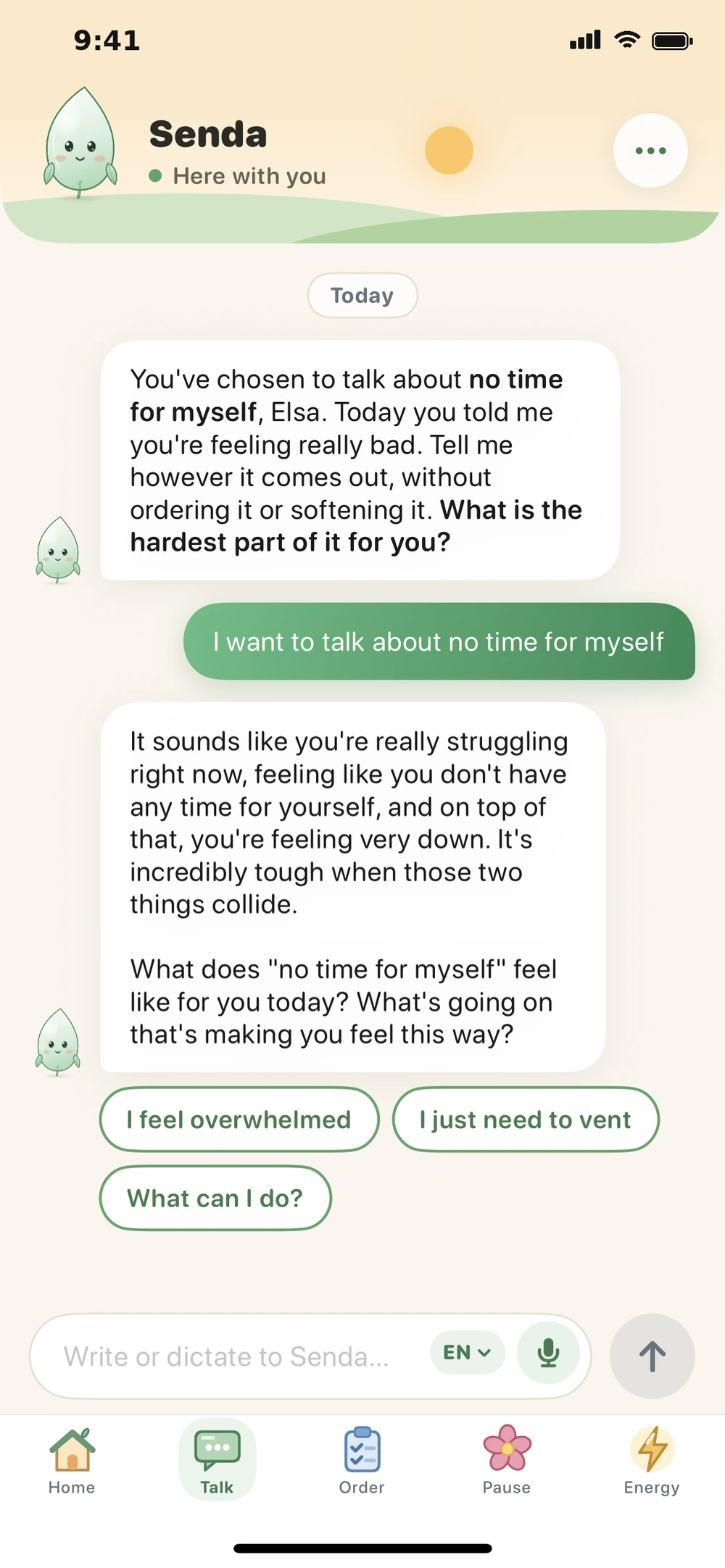
In Talk, you can say how you really are, any time, without judgment. Senda listens first and replies with your day in mind: your energy, your cycle and what is on your plate.
- Empty your head in Order: dictate everything and get a plan with dates and reminders.
- See your energy for today, so you can plan around it.
- Take a real break, from 5 minutes to 4 hours.
Free plan, no card needed. 3-day free trial.
Frequently asked questions
Is it normal to argue more after having a baby?
Yes. Many couples argue more in the first year because of less sleep, more tasks and new roles. Research shows relationship satisfaction often dips after a first child and many couples recover.
Why do I resent my partner after having a baby?
Often because one person carries most of the invisible planning and remembering. Making that load visible and sharing ownership of whole areas usually reduces resentment.
How do we reconnect as a couple after a baby?
Have a short daily check-in, protect sleep for both, share the load fairly and plan small moments together, such as a walk or a quiet dinner at home.
When should we see a couples counsellor after a baby?
If you argue most days, feel constantly resentful or distant, or cannot agree on how to share the load after trying, a counsellor can help.
Sources
Keep reading




Senda is a self-care and organization companion, not a medical service. This guide is informational and does not replace advice from a qualified professional.