

In short
- After a baby arrives, the list of things to remember explodes: feeds, appointments, vaccines, supplies, sleep.
- It often lands on the mother by default, because she is the one at home first, and it can quietly stay that way.
- Sharing whole areas early, not just tasks, protects your rest. Low mood that lasts more than two weeks needs a professional.
Why it grows so fast
The first weeks with a baby are full of new things to track: feeds, nappies, sleep, weight checks, vaccines, registration, paperwork, gifts to thank people for, and a house that still needs running. Much of it is invisible thinking: noticing, planning, remembering.
Because the mother is often the one at home first, she becomes the expert by default. She knows the feeding times, the size of the next nappies, the date of the next check-up. After a few weeks, everyone else asks her. That is how the postpartum load becomes a permanent role.
Signs it is too much
- You are the only one who knows the schedule, the supplies and the appointments.
- You cannot rest even when someone else holds the baby, because you are still planning.
- You feel alone with decisions, even with a partner at home.
- Resentment starts to build over small things.
How to share it, early
- Make it visible. Write down everything that has to happen: feeds, supplies, appointments, meals, laundry. Seeing it on paper changes the conversation.
- Share areas, not tasks. "You own nappies and supplies" means noticing, buying and restocking, not "can you get nappies when I ask".
- Protect sleep with shifts. Agree who is "on" at night and who sleeps, even for a few hours.
- Say yes to help. When someone offers, have a list ready: a meal, a load of washing, a walk with the pram.
- Lower the bar. Simple meals, an untidy living room, unanswered messages. This stage is temporary.
Read next: Feeling lonely even when you are never alone: why it happens and small steps back
Baby blues or something more
Feeling tearful and low in the first days after birth is common and usually passes within two weeks. If low mood, anxiety or feeling unable to cope lasts longer, or you have frightening thoughts, talk to your midwife, health visitor or doctor. Postnatal depression is common and treatable, and asking for help early makes a difference. If you are ever in danger, call your local emergency number.
 How Senda helps
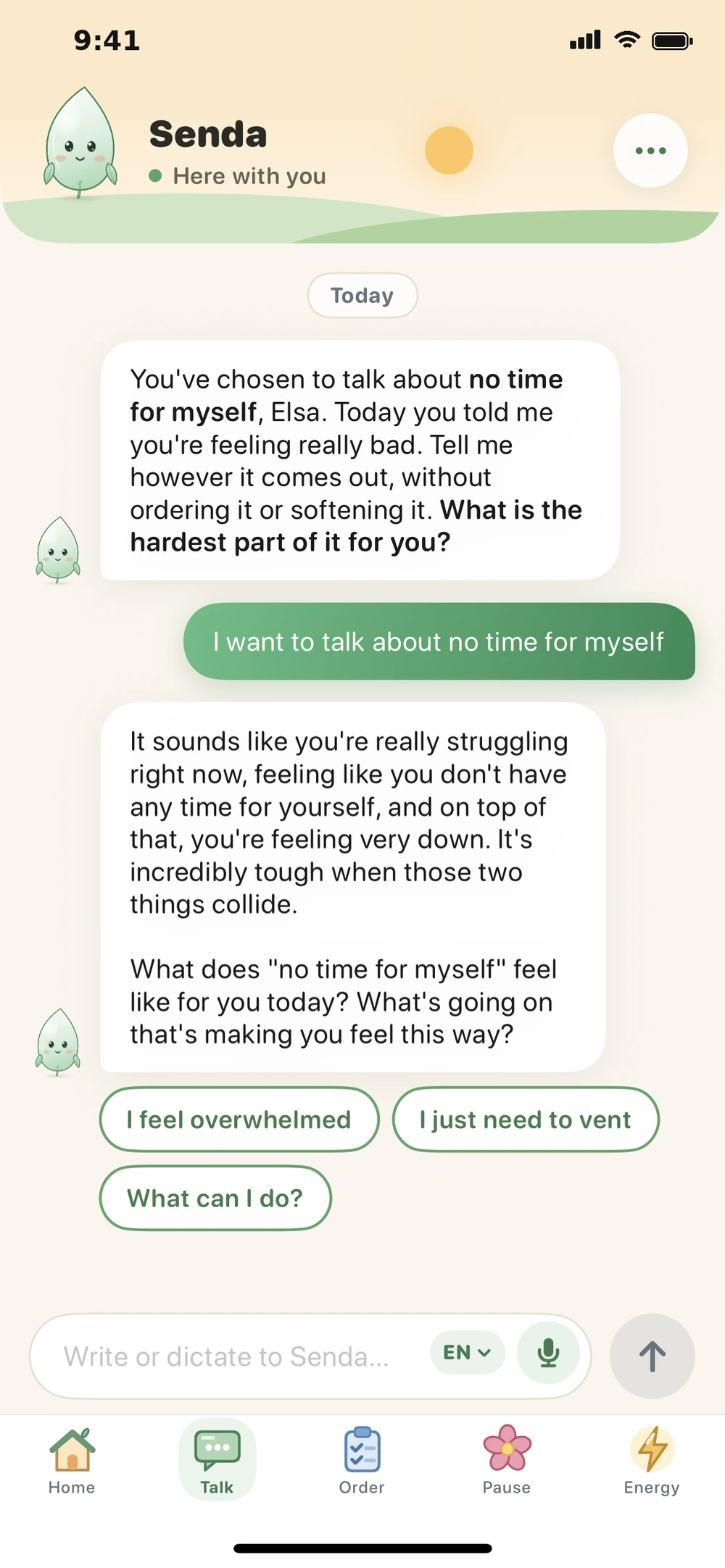
In Talk, you can say how you really are, any time, without judgment. Senda listens first and replies with your day in mind: your energy, your cycle and what is on your plate.
- Empty your head in Order: dictate everything and get a plan with dates and reminders.
- See your energy for today, so you can plan around it.
- Take a real break, from 5 minutes to 4 hours.
Free plan, no card needed. 3-day free trial.
Frequently asked questions
Why does the mental load increase after having a baby?
A newborn brings many new things to track: feeds, sleep, appointments, supplies and paperwork. The mother is often at home first, so she becomes the default person who knows and remembers everything.
How can my partner help with the postpartum mental load?
By taking ownership of whole areas, such as supplies, meals or night shifts, including noticing what is needed and planning it, rather than waiting to be asked for each task.
When is postpartum low mood a concern?
Baby blues usually pass within two weeks. If low mood, anxiety or feeling unable to cope lasts longer, talk to your midwife, health visitor or doctor.
Sources
Keep reading



Senda is a self-care and organization companion, not a medical service. This guide is informational and does not replace advice from a qualified professional.