

In short
- Going back to work is a big transition, practical and emotional. Mixed feelings are normal.
- Plan the logistics two to four weeks before: childcare trial, morning routine, who covers sick days.
- Talk to your employer early about your return and any flexibility you need; rights vary by country.
Mixed feelings are normal
Some mothers count the days to go back. Others dread it. Many feel both in the same hour: relief at being an adult in a meeting again, and guilt at leaving the baby. None of these feelings means you are doing it wrong.
What makes the return hard is that two big changes happen at once. Your baby starts a new routine with someone else, and you add a whole job back into a life that already felt full. The mental load does not pause while you work: someone still has to remember the nappies for nursery, the vaccination appointment and what is for dinner.
Two to four weeks before: the practical plan
- Childcare trial. Start nursery or the childminder a week or two before you go back, with short days at first. Both of you get used to it before the pressure starts.
- A morning routine on paper. Write down who does what between waking up and leaving the house. Test it twice before your first day.
- Sick-day plan. Agree in advance who stays home or who you can call when the baby is ill. It will happen, often in the first month.
- Feeding. If you are breastfeeding, decide what you want to keep, practise expressing and ask your employer about a private space and breaks. Acas, the UK workplace adviser, describes the steps employers should take.
- Shared calendar. Put work, nursery hours, appointments and pick-ups in one place your partner can see.
Talking to your employer
Ask for a meeting or call before your return. Useful topics:
- What changed in your team while you were away.
- Your start date, hours and any flexible arrangement you want to request.
- "Keeping in touch" days if your country or company has them, to ease back in.
- Space and time to express milk if you need it.
Rights around returning to work, flexible working and breastfeeding breaks are different in every country. Check your employer's policy and your national guidance, or ask your human resources team.
The first month back: a realistic checklist
| Week | Focus |
|---|---|
| Week 1 | Get through the days. Short evenings, simple dinners, early nights. |
| Week 2 | Notice what is not working in the morning routine and change one thing. |
| Week 3 | Review the home load with your partner: who owns which areas now? |
| Week 4 | Book one small thing just for you: a walk, a coffee with a friend, a class. |
A worked example
*This is an illustrative example, not a real user.* Sara goes back to work four days a week when her son is 11 months old. Two weeks before, he starts nursery for three mornings. She and her partner write the morning routine on the fridge: he does breakfast and the nursery drop-off, she does the bag the night before and the pick-up. They agree he takes the first sick day and she takes the second. In week three they notice that she is still the one remembering everything for nursery, so he takes over the nursery app and its messages.
Common mistakes
- Trying to be the same employee as before, immediately. Give yourself a few weeks to find a new rhythm.
- Keeping all the baby logistics in your head while also learning your job again.
- Skipping the childcare trial to save money or time, then starting both at once.
- Waiting for the guilt to go away before you enjoy your work. Both can exist together.
Read next: Parental burnout: the signs, the causes and what actually helps · Working from home with kids: a realistic plan for focus, breaks and less guilt
When to get help
If you feel low most days, cannot sleep even when the baby sleeps, feel numb or anxious all the time, or have thoughts of harming yourself, talk to your doctor or health visitor. Postnatal depression can start or continue many months after the birth, including around the return to work, and it can be treated.
 How Senda helps
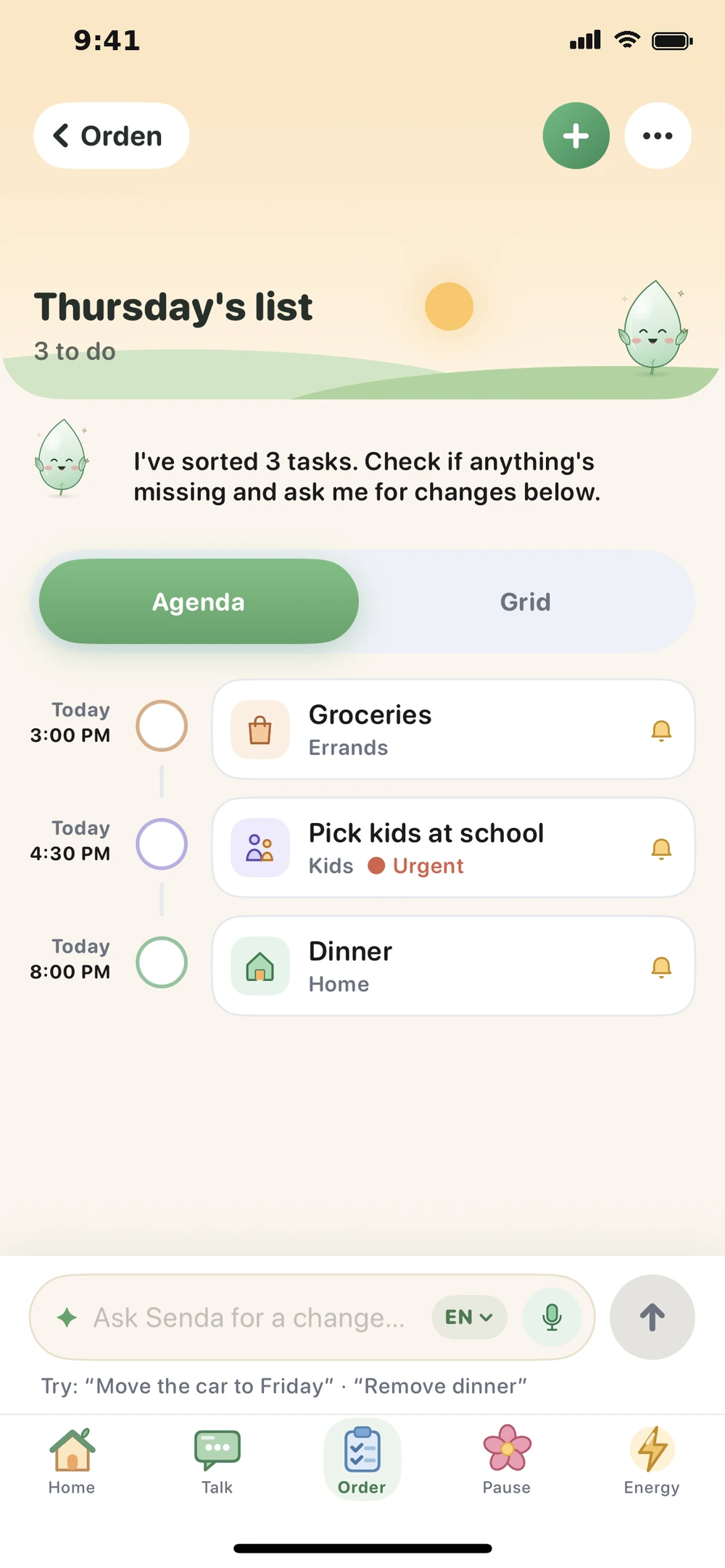
In Order, you dictate everything at once, however it comes out ("dentist Tuesday at 5, gift for Lucía, pay the gym") and Senda turns it into tasks with dates, categories and reminders. Change it just by saying so.
- Plan around your energy: Senda shows your level for the day.
- Vent in Talk when the list feels like too much.
- Protect a real break in your plan.
Free plan, no card needed. 3-day free trial.
Frequently asked questions
How do I prepare to go back to work after maternity leave?
Start childcare one or two weeks early with short days, write and test a morning routine, agree a sick-day plan, set up a shared calendar and talk to your employer about your return before your first day.
Is it normal to feel guilty about going back to work?
Yes. Many mothers feel guilt, relief and sadness at the same time. These feelings usually ease as your new routine settles.
Can I ask for flexible working after maternity leave?
In many countries you can request flexible hours or part-time work, but the rules differ. Check your employer's policy and your national guidance before your meeting.
What if I feel very low after going back to work?
If low mood, anxiety or numbness last more than a couple of weeks, talk to your doctor. Postnatal depression can appear months after the birth and can be treated.
Sources
Keep reading



Senda is a self-care and organization companion, not a medical service. This guide is informational and does not replace advice from a qualified professional.